Definition
What is a blown film machine?
A blown film machine melts polymer pellets and extrudes them through a circular die into a tube. Air inflates the tube into a bubble, cooling rings stabilize it, and collapsing frames flatten it into film that is wound into rolls — ready for printing or bag making.
E-SHION builds the full width of this category: compact single-layer lines, ABA and three-layer co-extrusion lines with IBC internal bubble cooling, plus a dedicated PP line. Folded film width from 100 mm to 2,600 mm and output from 35 to 500 kg/h.
How it works
How a blown film machine works
Melt and mix the polymer
Pellets of LDPE, LLDPE, HDPE, MDPE, EVA or PA/EVOH (for barrier films) are fed into the barrel, where the screw melts and homogenizes them under controlled heating. On E-SHION multi-layer lines, two or more extruders feed one co-extrusion die, so each layer can use the material that fits its job — a recycled or filled core, a clean skin, a barrier layer.
Form the tube and inflate the bubble
The melt passes through an annular die to form a tube, and pressurized air inflates it into a bubble. An air ring cools the outside of the bubble. E-SHION lines add automatic air ring control, which adjusts cooling airflow continuously to hold a stable, uniform gauge.
Cool both sides and check the profile
Internal bubble cooling (IBC) blows chilled air inside the bubble, cooling both surfaces at once. That raises output per die size and improves film clarity. Online thickness control monitors the profile at full line speed, so the film stays within tolerance from startup to roll change.
Flatten the bubble into film
The bubble is guided up the tower into a collapsing frame, then flattened between nip rolls into two-layer film. Width is set by die diameter and blow-up ratio — E-SHION lines produce film from 500 mm to 2500 mm wide.
Wind finished rolls
The flattened film is wound into rolls with controlled tension, synchronized with the nip rolls to avoid stretch or sag. Rolls leave the line ready for bag making, printing, lamination or shipping.
Keep the value chain inside one factory
Blown film is only the first stage: E-SHION bag making machines convert rolls into finished bags, flexo and gravure presses add printing, and granulators return edge trim and rejected film to reusable pellets.
Applications
What it is
used for
Food & flexible packaging
Barrier and high-clarity films for snack pouches, frozen food bags and lamination.
Shopping & carrier bags
T-shirt, vest and grocery bag film at retail-bag quality, printed or plain.
Agricultural film
Greenhouse, mulch and silage films with UV-stabilized recipes and wide dies.
Industrial & protective packaging
Air-bubble cushioning film and heavy-duty wrapping grades.
Capabilities
Range &
configuration
| Parameter | Details |
|---|---|
| Film width (folded) | 100 – 2,600 mm |
| Layers | 1–3 · monolayer / ABA / co-extrusion IBC |
| Film thickness | 0.01 – 0.15 mm |
| Output | 35 – 500 kg/h |
| Materials | LDPE / HDPE / LLDPE / PP |
| Options | IBC cooling · automatic air ring · thickness gauge · dosing |
Match the film to the machine
Which film material
do you run?
Every film recipe has a different melt behaviour. Choose the E-SHION line that matches your material and output target.
| Material | Typical use | Best-fit E-SHION line | Output | Film width (folded) |
|---|---|---|---|---|
| LDPE | Carrier bags, produce bags, general packaging film | Monolayer SJ-50–65 · ABA co-extrusion | 30–120 kg/h | 600–1200 mm |
| HDPE | T-shirt and vest bags, retail film | Monolayer SJ-50–65 | 30–120 kg/h | 600–1200 mm |
| LLDPE | Tougher film, frozen food, industrial liners | ABA · 3-layer IBC SJ-3 | 40–120 kg/h · up to 500 kg/h | up to 2,600 mm |
| PP | Crisp, glossy film for lamination and bags | PP blown film line | up to 100 kg/h | 200–1000 mm |
| Recycled PE content | In-plant scrap back to film | Granulator + film line | granulation 150–1000 kg/h | — |
Monolayer vs multi-layer: the real line-up
| Line | Layers | Folded width | Output | Best for |
|---|---|---|---|---|
| Monolayer SJ-50 / 55 / 60 / 65 | 1 | 600–1200 mm | 30–120 kg/h | Simple bags at the lowest investment |
| ABA co-extrusion | 3 (A/B/A) | 100–1200 mm | 40–120 kg/h | Strength with coloured or recycled core |
| IBC 3-layer SJ-3 | 3 + internal bubble cooling | up to 2,600 mm | up to 500 kg/h | Barrier food film and high-clarity industrial film |
Film types
Browse by film type
Machines in this category
All Blown Film Machines
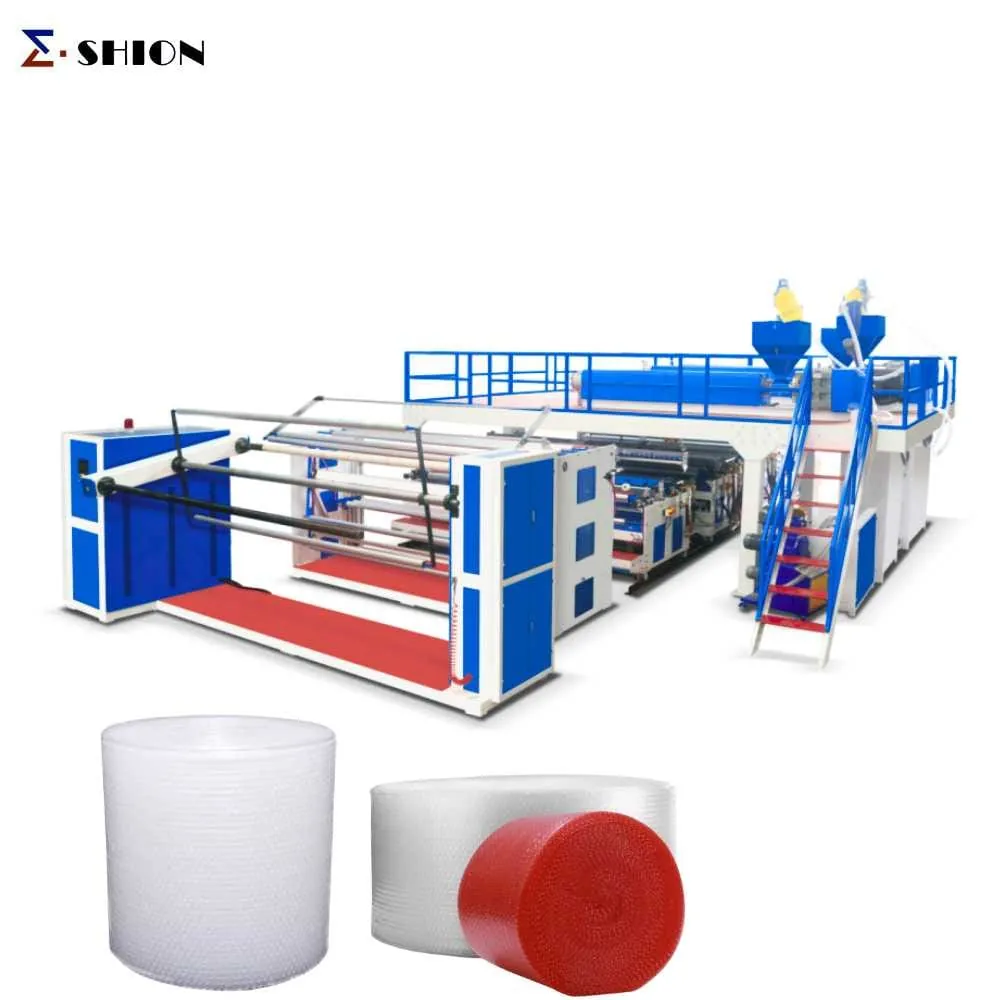
3 Layer Air Bubble Film Machine
Co-extruded air-bubble film for protective packaging, with high barrier strength.
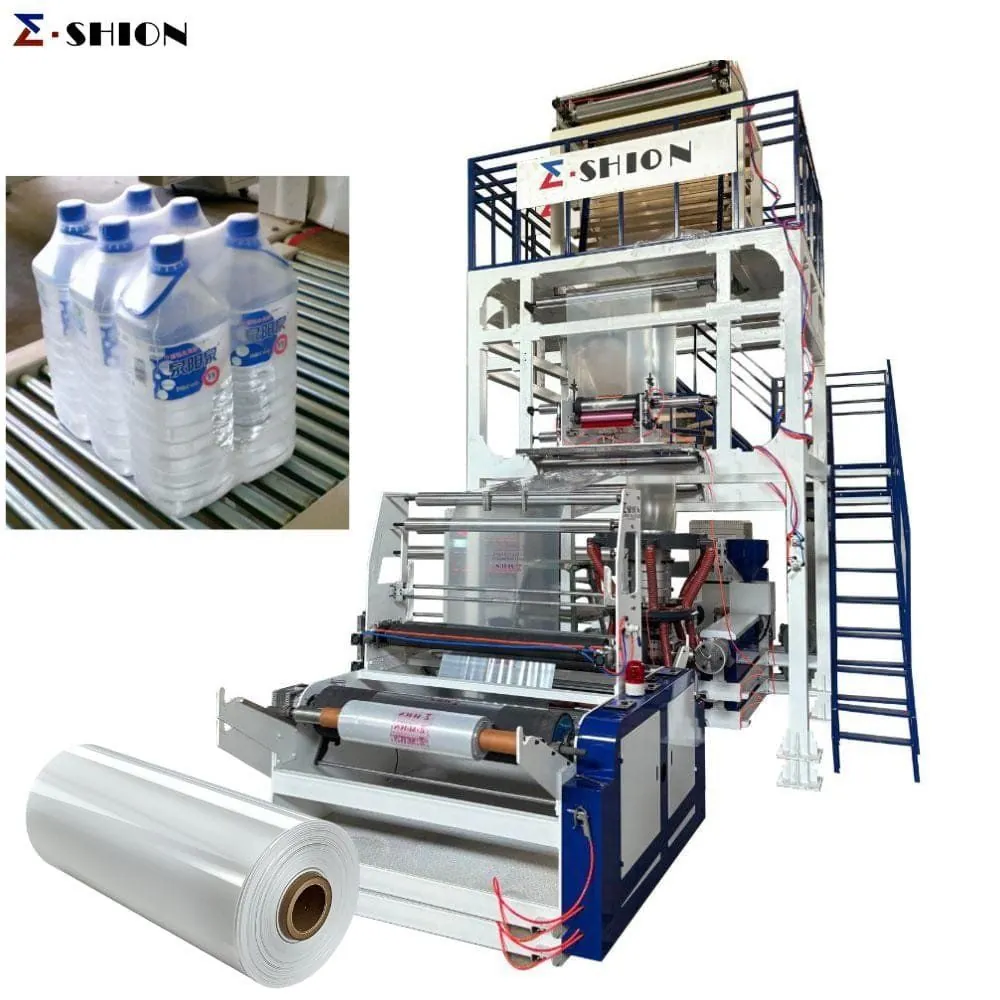
ABA Film Blowing Machine
Three-layer co-extrusion with two extruders for HDPE, LDPE, LLDPE and recycled fillers.
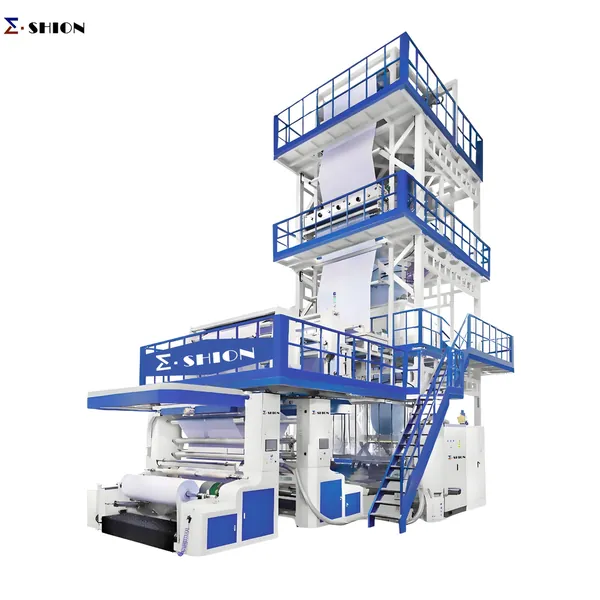
IBC 3 Layer Film Blowing Machine
Internal bubble cooling, automatic air ring and online thickness control for high output.
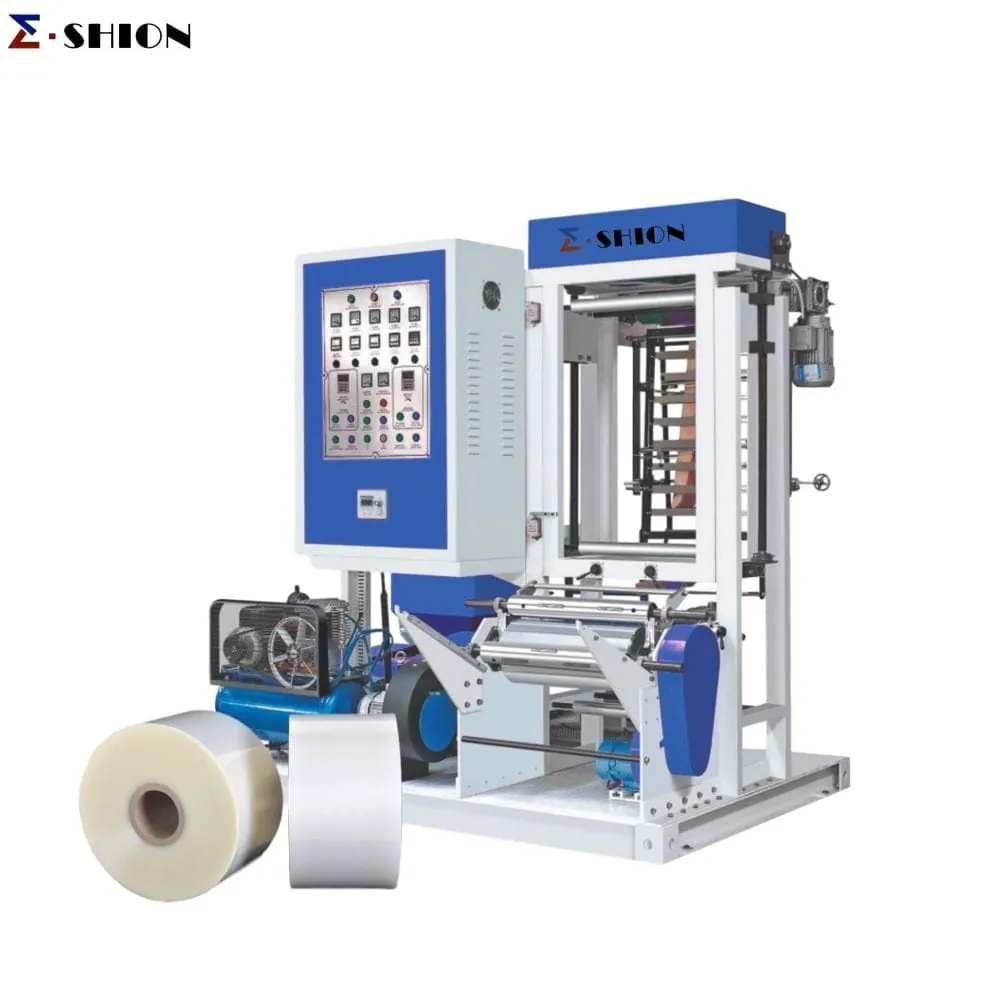
Mini Film Blowing Machine
Compact single-layer line for small-scale and starter film production.
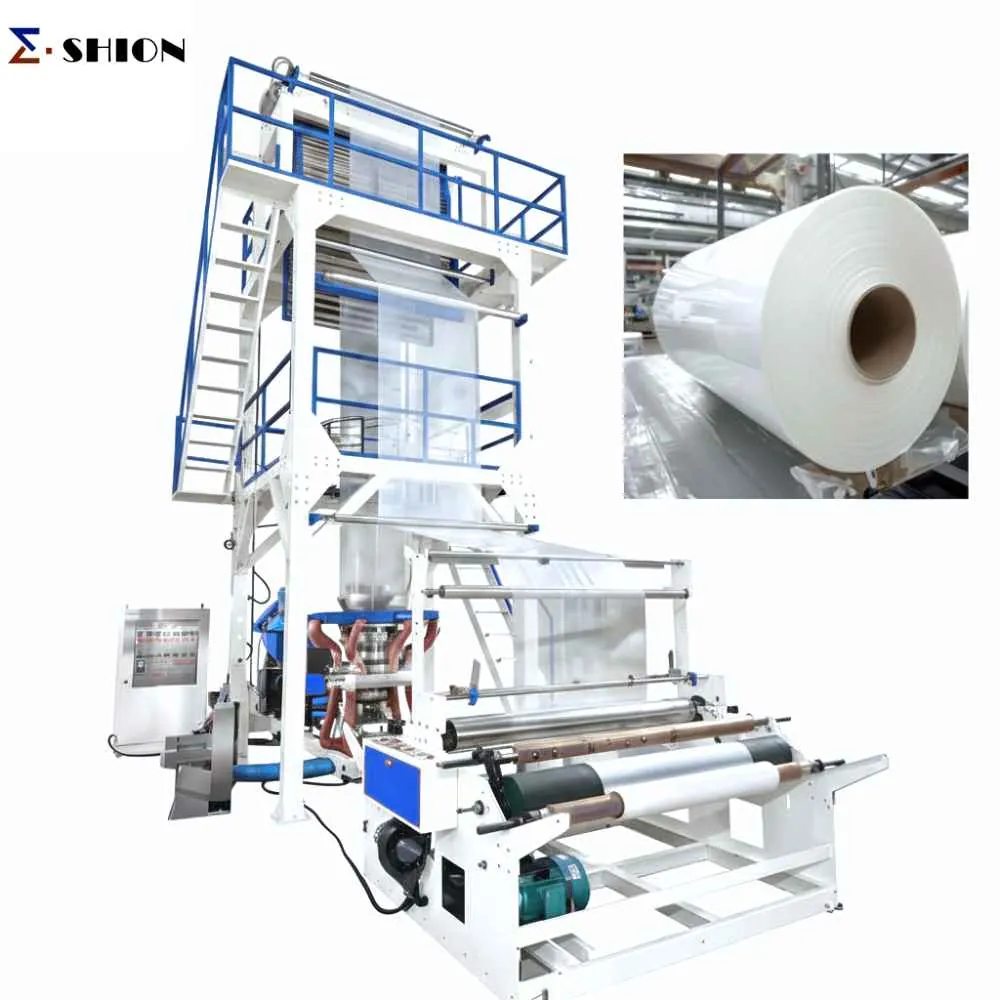
Monolayer Blown Film Machine
Economical single-layer line for HDPE, LDPE and LLDPE films with stable output.
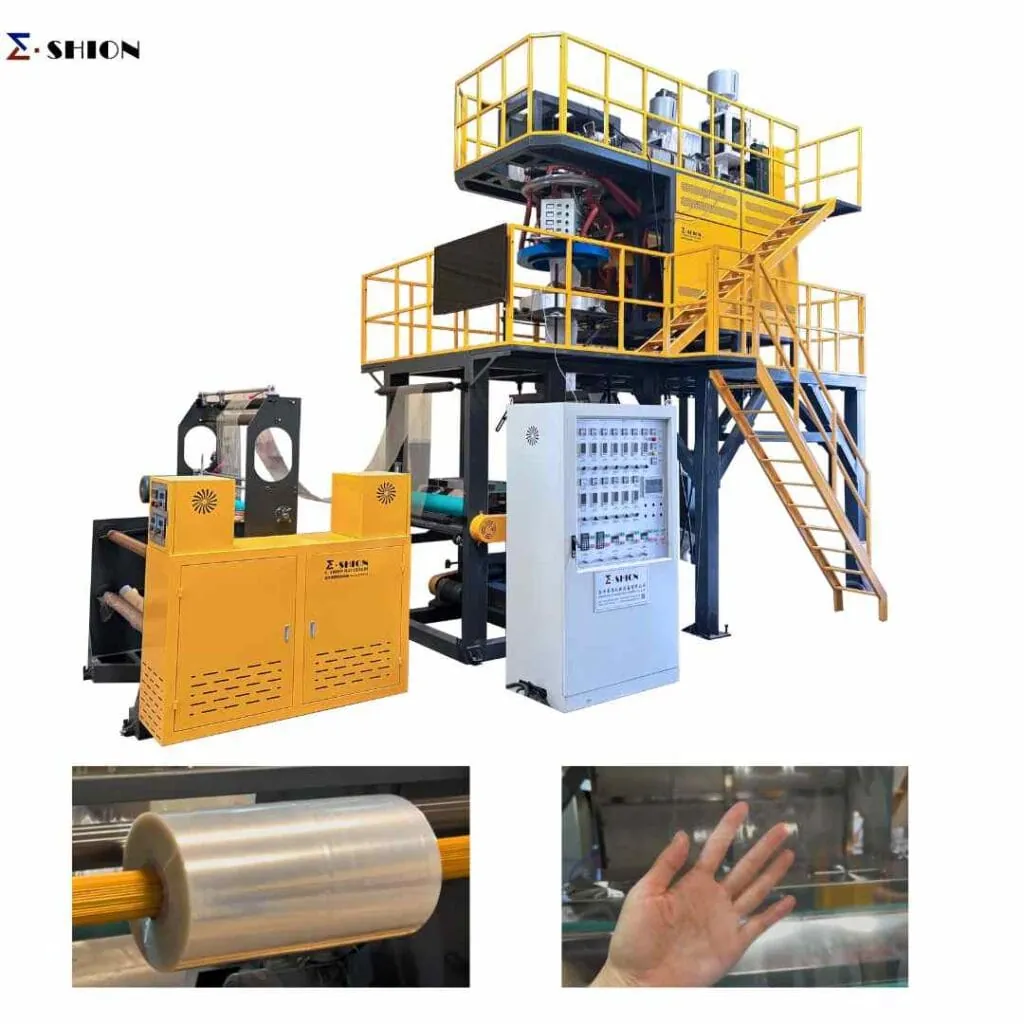
PP Film Blowing Machine
Dedicated PP blown film machine with precise temperature control.
Knowledge hub
Film blowing machine guides
Answers from our engineers — sizing, pricing, materials and troubleshooting, based on real SJ-series specifications.
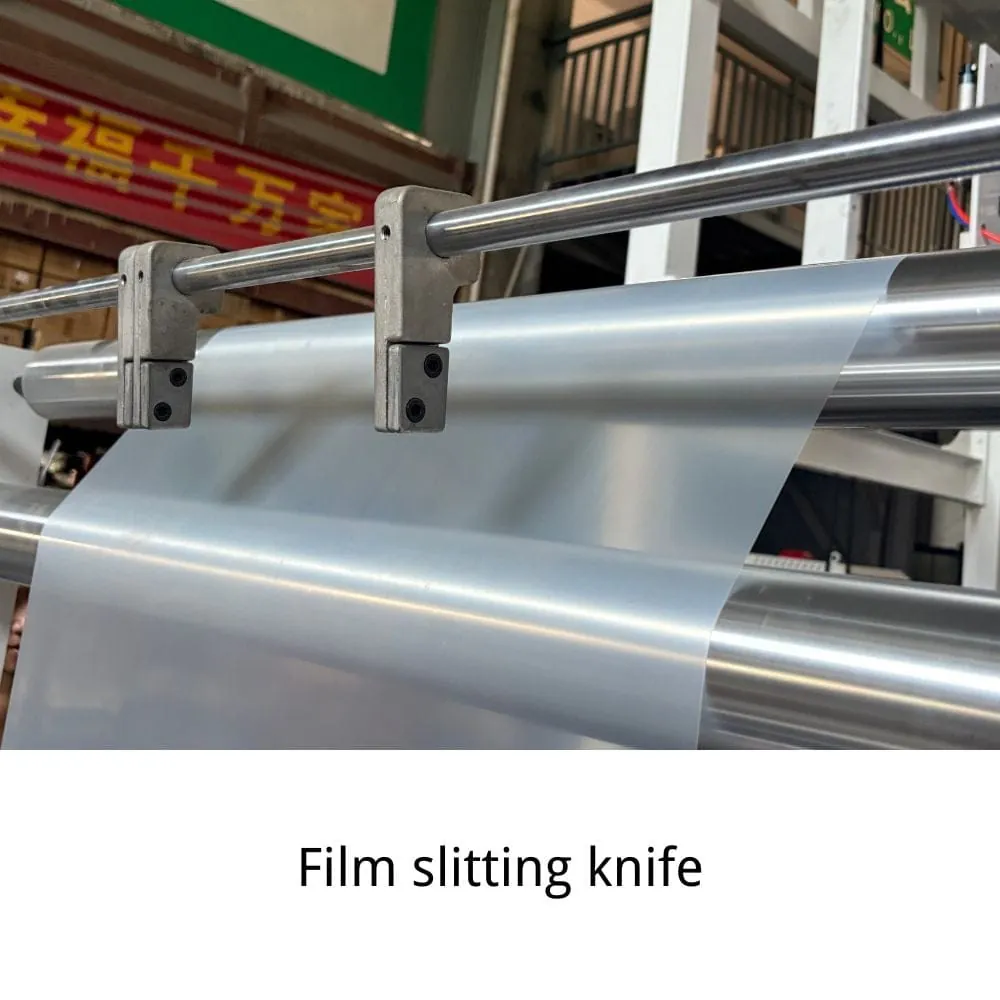
How a blown film machine works
From pellets to bubble to roll — the extrusion process explained step by step.
Read guide →How to choose a blown film machine
Match width, layers and output to your product and daily volume.
Read guide →Blown film machine price guide
What drives the price: width, layer count, IBC cooling and options.
Read guide →How to calculate film output
Estimate kg/h from die size, line speed and film thickness.
Read guide →Mono layer vs coextrusion
Cost and performance of single-layer vs ABA and multi-layer lines.
Read guide →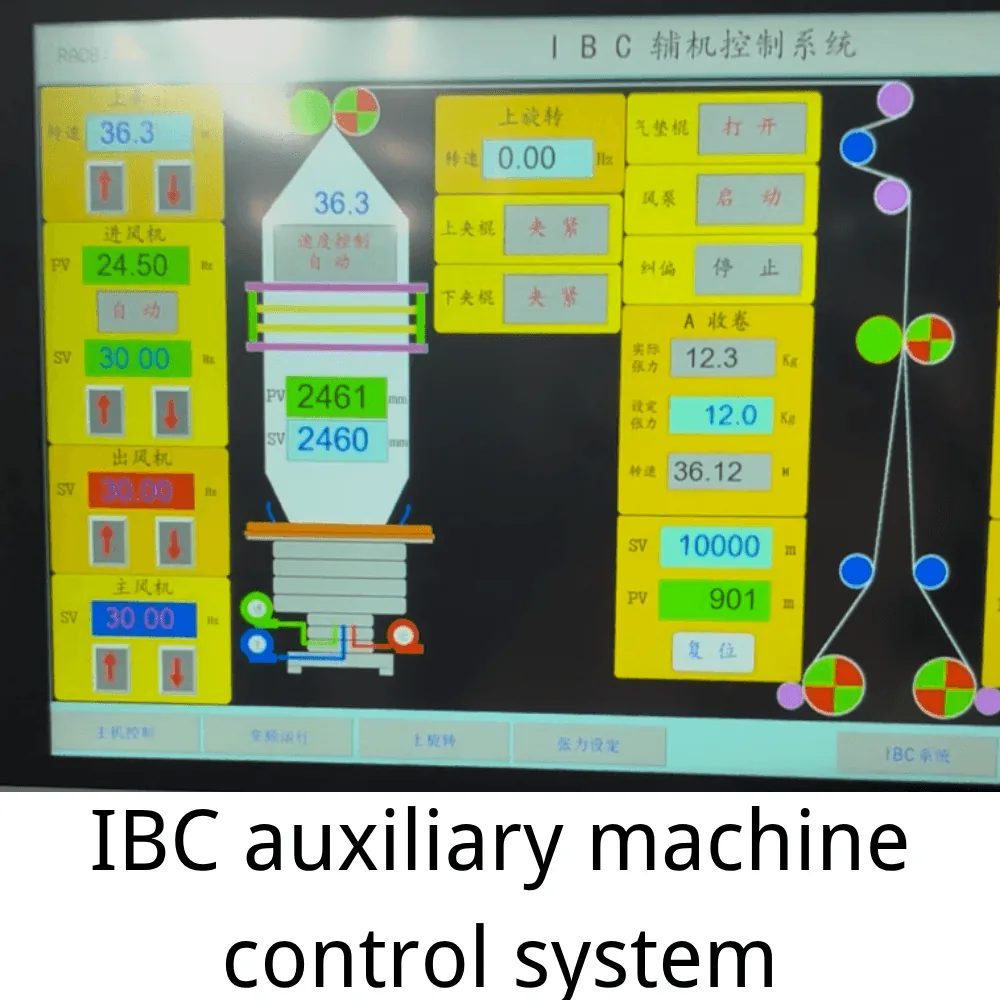
IBC internal bubble cooling
What it does and when it pays for itself on a 3-layer line.
Read guide →
Can recycled pellets be used for blown film?
Blend ratios, quality risks and closed-loop film recipes.
Read guide →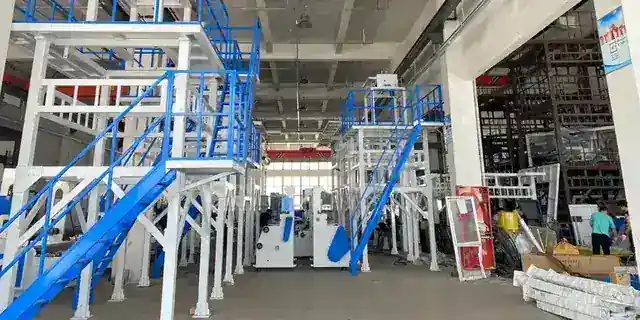
Wrinkles and thickness variation
Common causes on the line and what to check first.
Read guide →PP blown film
What you can make with a dedicated PP line.
Read guide →Buyers ask
Frequently asked
questions
How do I choose a blown film machine?
Choose by film width, layer count and daily output: monolayer lines are economical for simple films, while ABA or multi-layer IBC lines add strength and barrier performance for food and industrial packaging. Material and options such as internal bubble cooling decide output quality and efficiency.
What is the difference between monolayer and multi-layer blown film machines?
A monolayer machine extrudes a single layer — simple packaging at the lowest investment. Multi-layer co-extrusion combines several layers in one die head for strength and barrier properties without lamination.
What materials can it process?
LDPE, HDPE, LLDPE and PP, with recycled content possible in middle layers. PP needs dedicated temperature control, which is why the PP line is a separate model.
What width and output ranges do you offer?
Folded film width from 100 mm to 2,600 mm and output from 35 to 500 kg/h, depending on model and configuration. The exact range for your line is confirmed in the proposal.
Can the film line integrate printing or bag making?
Yes — the film leaves the line print-ready and feeds directly into flexo or gravure presses and bag making machines as one continuous production chain.
Build My Line
Build My Line
Get your custom solution
Plan your film line
with our engineers
Tell our engineering team your output target and facility conditions. We design and build machinery to match — average response time 4 hours.
Send Your Inquiry →