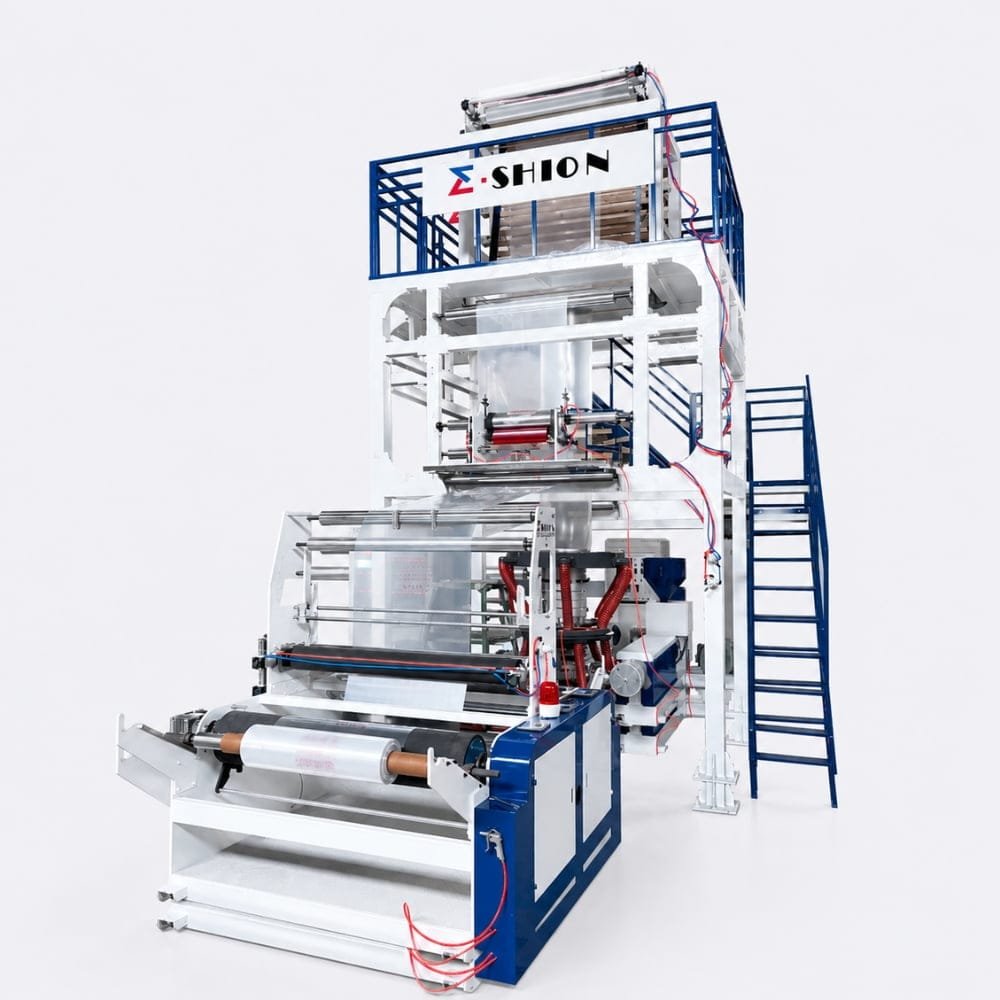
Gauge variation: cooling and air ring
When operators notice thickness variation in blown film, the root cause is often found in the cooling and air-ring settings rather than the extruder itself. Proper calibration of the air ring ensures uniform cooling across the entire bubble, which is absolutely essential for maintaining a consistent profile. For instance, with Internal Bubble Cooling (IBC), the system holds tolerance at ≤ ±5% on the SJ-3 model. If you are running a different setup, using a different cooling configuration, or need specific tolerance data for other machine models, confirm with our engineers.
Wrinkles: tension and nip rolls
Film wrinkles are a frequent complaint on the production floor, but they rarely originate from the die. Instead, wrinkles usually come from improper tension control or misaligned nip rolls. When the web tension fluctuates during the haul-off process, or when the nip rolls are not perfectly parallel, the film gathers and folds, creating visible wrinkles. Adjusting the tension settings and verifying the mechanical alignment of the nip rolls will typically resolve this issue. Regular maintenance of these components is necessary to prevent recurring defects. If you need the exact torque specifications for your specific nip roll model, confirm with our engineers.
Downstream effects on bags and print
Maintaining a uniform film profile is critical long before the final product is actually made. Consistent gauge keeps sealing temperatures and printing registration accurate downstream. If the film thickness varies significantly, the heat seal bars may not melt the material evenly, leading to weak or failed seals on the final packaging. Similarly, inconsistent thickness causes the film to stretch unevenly through the printing press, ruining print registration and resulting in misaligned graphics. This ensures the final packaging meets both aesthetic and structural requirements. If you are experiencing specific downstream failures with a new resin blend, confirm with our engineers.
When to involve the manufacturer
If adjusting the air ring, tension, and nip rolls does not resolve the defects, it is time to involve the manufacturer. Every resin behaves differently under heat and pressure, and machine setup is confirmed with engineers based on your recipe. Our technical team can review your specific material formulation, melt index, and additives to adjust the machine parameters accordingly. Proper initial calibration prevents costly downtime and material waste later in the shift. For any operational parameters, temperature profiles, or screw speeds not explicitly covered in your standard operating procedures, confirm with our engineers.
| Defect | Primary Cause |
|---|---|
| Thickness variation | Cooling and air-ring settings |
| Film wrinkles | Tension or nip-roll alignment |
Frequently asked questions
What typically causes thickness variation in blown film production?
Thickness variation is often caused by cooling and air-ring settings, which control how uniformly the bubble solidifies during production.
What exact thickness tolerance does IBC hold on the SJ-3?
The Internal Bubble Cooling system holds tolerance at ≤ ±5% on the SJ-3 model.
Are film wrinkles usually caused by a faulty or misaligned die?
No, wrinkles usually come from tension or nip-roll alignment, not the die.
Why is consistent film gauge so important for downstream processes?
Consistent gauge keeps sealing temperatures and printing registration accurate downstream, preventing weak seals and misaligned graphics on the final product.
Get your custom solution
Talk to our
engineering team
Send your material, sizes and output target — our engineers reply within 4 hours on business days.
Send Your Inquiry →