How Standard Cooling Works
In standard blown film extrusion, cooling relies entirely on external air rings. These rings blow ambient or chilled air directly onto the outside of the extruded plastic bubble. The heat must travel from the inner layer of the bubble through the plastic melt to the outer surface before it can dissipate into the environment. This external-only method creates a significant thermal gradient, meaning the inside of the bubble remains hotter for a longer period. As production speeds increase to meet higher output demands, this external cooling becomes a physical bottleneck, limiting the freeze line height and restricting overall line speed.
What IBC Changes
Internal Bubble Cooling (IBC) fundamentally alters this heat transfer dynamic by introducing forced air circulation directly inside the bubble. Instead of relying solely on external air, IBC systems draw air from the top of the bubble, cool it via an integrated heat exchanger, and inject it back into the center of the bubble. This dual cooling approach—extracting heat from both the inside and the outside—drastically increases the overall heat exchange rate. The result is a highly stable bubble with a lower, more consistent freeze line. This internal air circulation also improves bubble stability, allowing for higher output rates without sacrificing film quality. The IBC cooling accuracy reaches ±5 mm, ensuring precise dimensional control during high-speed production runs.
SJ-3 Specifications
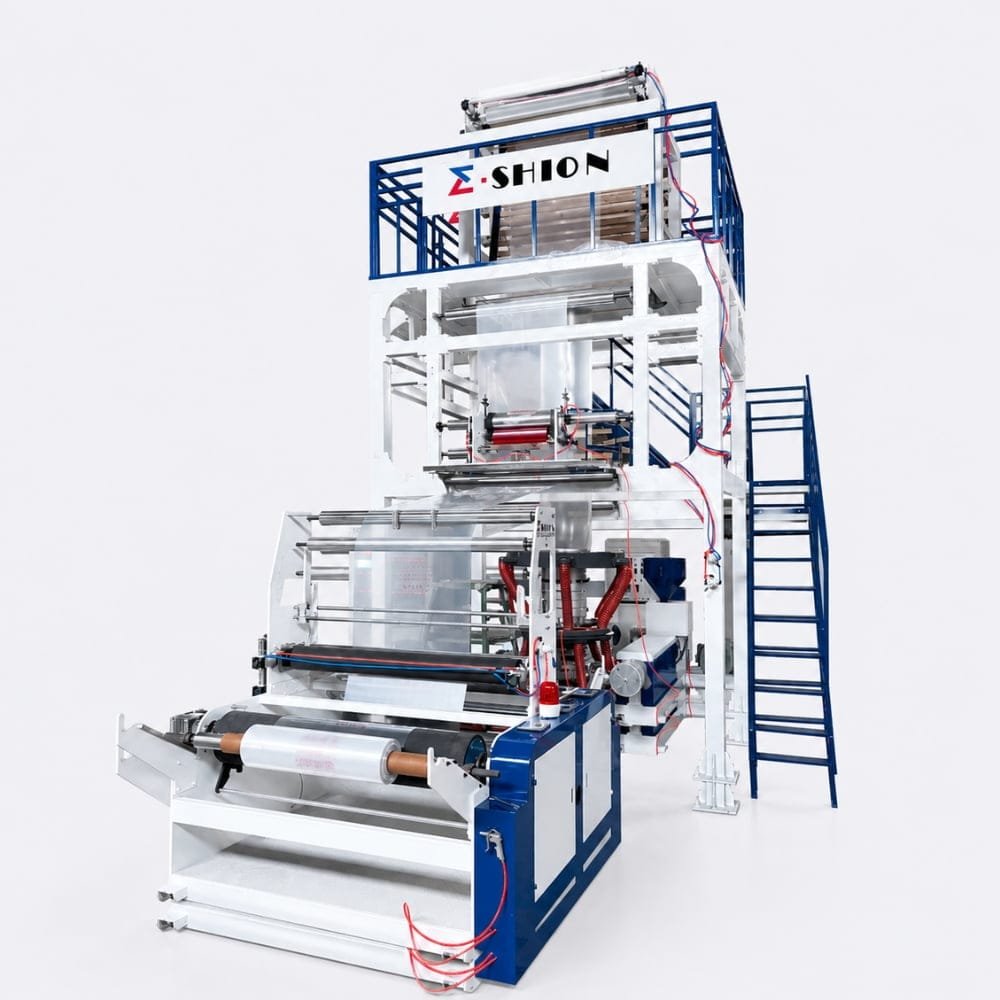
Our SJ-3 IBC line is specifically engineered to leverage these advanced cooling advantages. The system features a multi-layer co-extrusion setup comprising one SJ90/30 extruder and two SJ75/30 extruders. All extruders are equipped with high-quality nitrided 38CrMoAlA screws to ensure enhanced durability and consistent material melting. The SJ-3 line achieves a maximum output of 500 kg/h. It produces film with a folded width up to 2600 mm and a thickness range of 0.025–0.15 mm, maintaining a strict thickness tolerance of ≤ ±5%. The entire system operates on a standard 380 V/50 Hz power supply with a total power consumption of about 250 kW.
When IBC Is Worth It
Upgrading to an IBC system is a strategic decision based on specific production requirements. If your current standard cooling setup limits your output or causes bubble instability at higher speeds, IBC provides the necessary thermal management. The SJ-3 line is particularly worth the investment when you need to maximize output up to 500 kg/h while maintaining strict thickness tolerances of ≤ ±5%. Furthermore, if your applications demand precise bubble control, the ±5 mm IBC cooling accuracy ensures consistent film properties across the entire web. For specific facility power requirements, custom thickness applications outside the 0.025–0.15 mm range, or alternative extruder configurations, please confirm with our engineers.
| Parameter | Specification |
|---|---|
| Max Output | 500 kg/h |
| Folded Width | Up to 2600 mm |
| Thickness Range | 0.025–0.15 mm |
| Thickness Tolerance | ≤ ±5% |
| IBC Cooling Accuracy | ±5 mm |
| Extruders | 1x SJ90/30, 2x SJ75/30 |
| Screw Material | Nitrided 38CrMoAlA |
| Power Supply | 380 V/50 Hz |
| Total Power | About 250 kW |
Frequently asked questions
What is the maximum output of the SJ-3 IBC line?
The SJ-3 IBC line achieves a maximum output of 500 kg/h.
What extruders are used in the SJ-3 system?
The system uses one SJ90/30 extruder and two SJ75/30 extruders, all featuring nitrided 38CrMoAlA screws.
How precise is the IBC cooling accuracy?
The IBC cooling accuracy is ±5 mm, ensuring precise dimensional control.
What is the power requirement for the SJ-3 line?
The system operates on a 380 V/50 Hz power supply with a total power consumption of about 250 kW.
Get your custom solution
Talk to our
engineering team
Send your material, sizes and output target — our engineers reply within 4 hours on business days.
Send Your Inquiry →