Home/Machines
Five lines.
One accountable partner.
Every E-SHION machine ships engineered, tested and documented — matched to your material, your output target and your facility. Below, the working specifications for our blown film machines, bag making machines, flexographic and gravure printing presses and plastic recycling granulators.
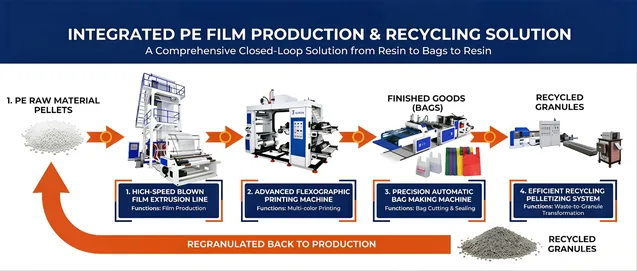
From resin to roll
How a blown film
machine works
A blown film machine turns polymer pellets into a continuous flat film in one line. E-SHION builds the complete extrusion train — extruder, die head, cooling tower, collapsing frame and winder — so every stage is tuned together for a stable bubble, uniform gauge and high output.
Melt and mix the polymer
Pellets of LDPE, LLDPE, HDPE, MDPE, EVA or PA/EVOH (for barrier films) are fed into the barrel, where the screw melts and homogenizes them under controlled heating. On E-SHION multi-layer lines, two or more extruders feed one co-extrusion die, so each layer can use the material that fits its job — a recycled or filled core, a clean skin, a barrier layer.
Form the tube and inflate the bubble
The melt passes through an annular die to form a tube, and pressurized air inflates it into a bubble. An air ring cools the outside of the bubble. E-SHION lines add automatic air ring control, which adjusts cooling airflow continuously to hold a stable, uniform gauge.
Cool both sides and check the profile
Internal bubble cooling (IBC) blows chilled air inside the bubble, cooling both surfaces at once. That raises output per die size and improves film clarity. Online thickness control monitors the profile at full line speed, so the film stays within tolerance from startup to roll change.
Flatten the bubble into film
The bubble is guided up the tower into a collapsing frame, then flattened between nip rolls into two-layer film. Width is set by die diameter and blow-up ratio — E-SHION lines produce film from 500 mm to 2500 mm wide.
Wind finished rolls
The flattened film is wound into rolls with controlled tension, synchronized with the nip rolls to avoid stretch or sag. Rolls leave the line ready for bag making, printing, lamination or shipping.
Keep the value chain inside one factory
Blown film is only the first stage: E-SHION bag making machines convert rolls into finished bags, flexo and gravure presses add printing, and granulators return edge trim and rejected film to reusable pellets.
Every stage below is a complete E-SHION product line — blown film, bag making, flexo, gravure and recycling — designed to be combined or run standalone.
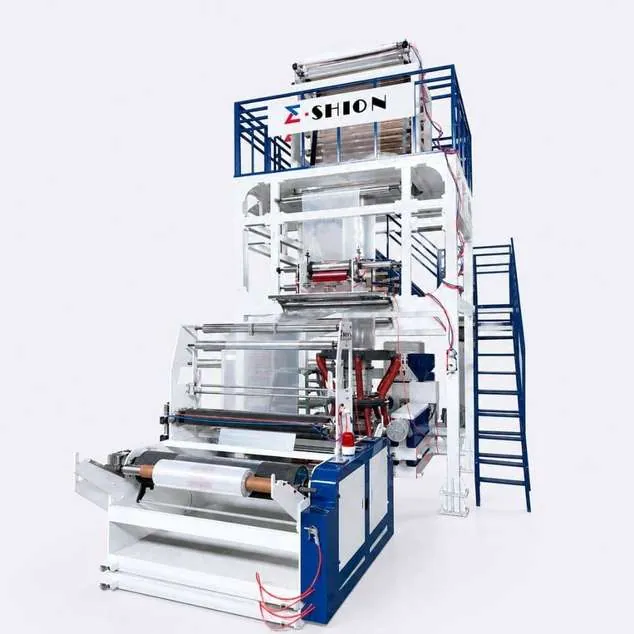
Multi-Layer Co-Extrusion
Blown Film Machine
Layered barrier films engineered for food packaging, agricultural films and industrial applications. Co-extrusion heads build barrier properties in the film itself — no lamination needed downstream. Automatic die head adjustment, internal bubble cooling and online thickness control keep the profile uniform at full line speed.
| Film width | 500 – 2500 mm |
|---|---|
| Output | 50 – 500 kg/h |
| Layer structure | 3 – 5 layers (A/B/A, A/B/C, multi) |
| Typical capacity | 2 – 8 tons/day |
| Materials | LDPE · LLDPE · HDPE · MDPE · EVA · PA · EVOH |
| Film applications | High-barrier food film · agricultural film · shrink film · industrial liner |
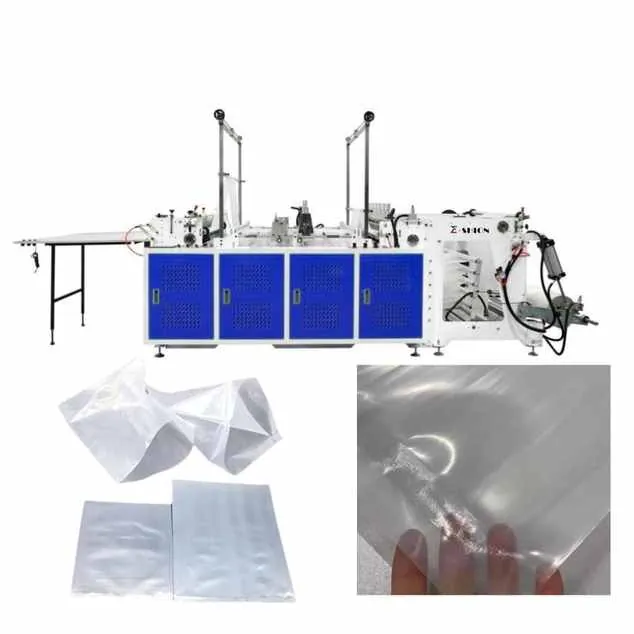
High-Speed Automatic
Bag Making Machine
Servo-driven bag makers for T-shirt bags, grocery bags, vest bags and garbage bags — straight from the blown film roll to a finished, sealed and stacked bag. Heat-seal or U-seal configurations, photocell registration and automatic stacking as standard.
| Speed | 80 – 400 cycles/min |
|---|---|
| Bag width | 100 – 300 mm |
| Sealing type | Heat seal / U-seal |
| Daily output | 40,000 – 200,000 bags/day |
| Bag types | T-shirt · vest · grocery · garbage · flat bags |
| Optional | Punching handle · zipper · printing registration |
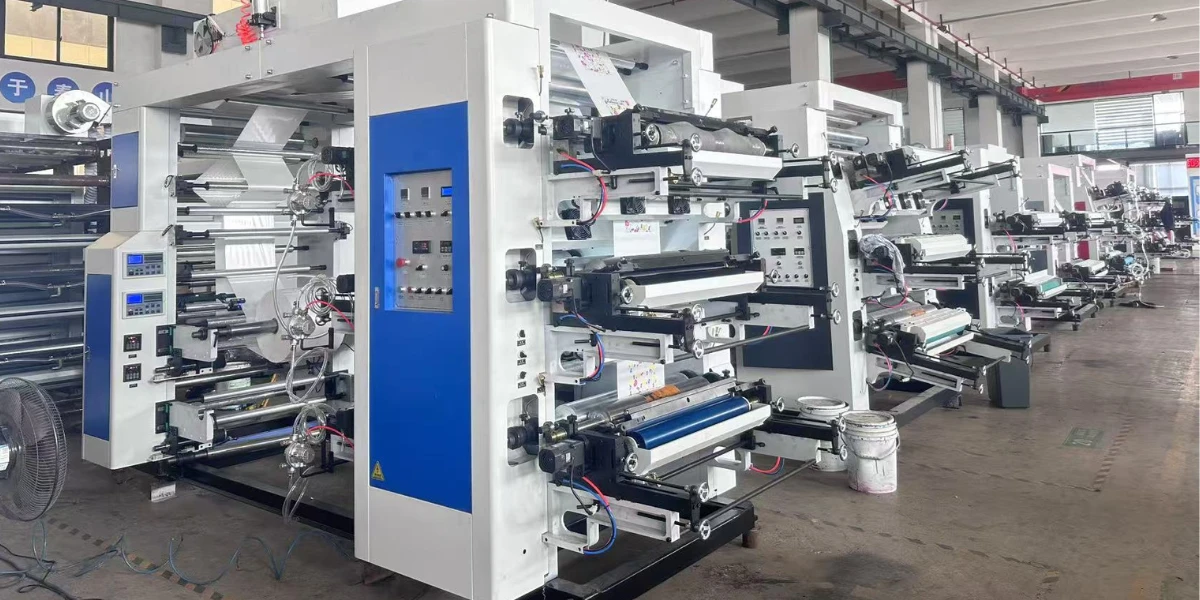
Flexographic Printing Press
CI and stack-type flexo presses for high-quality printing on films, papers and laminates. Quick-change sleeves, auto-registration and drying systems tuned for solvent or water-based inks.
| Print width | 400 – 1800 mm |
|---|---|
| Colors | 2 – 8 |
| Speed | 150 – 450 m/min |
| Daily output | 10,000 – 30,000 m²/day |
| Configurations | CI (central impression) · Stack type |
| Substrates | PE film · PP film · Paper · Laminates |
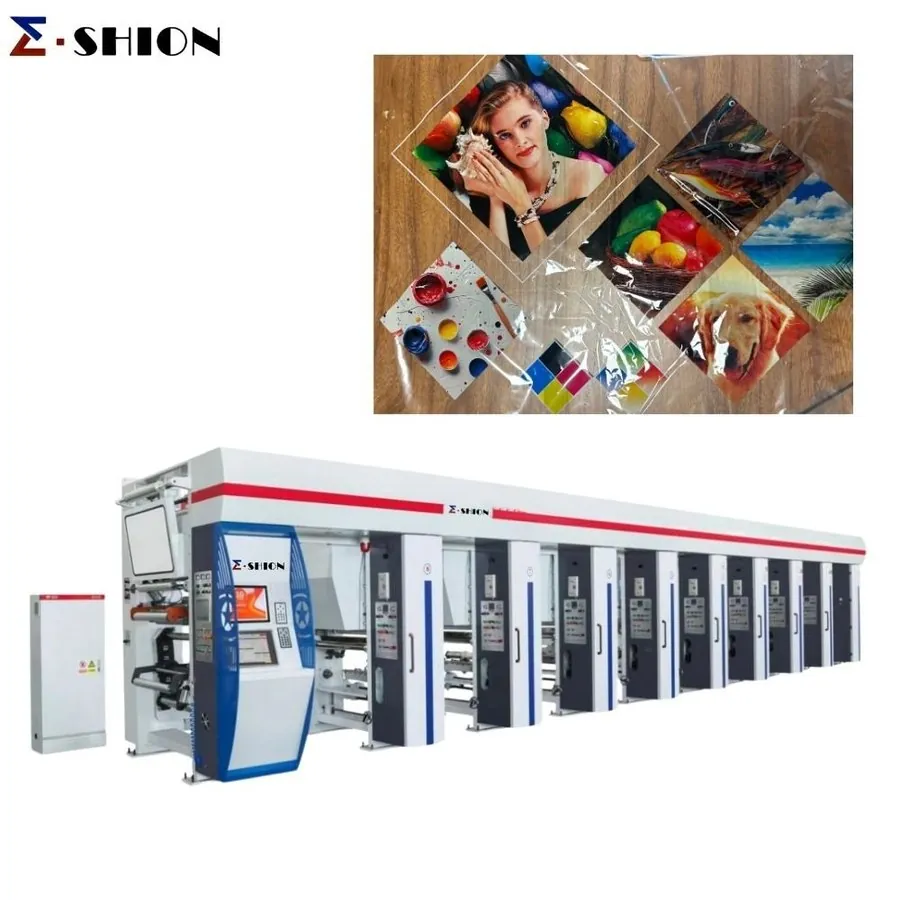
Gravure Printing Press
Rotogravure presses for long, consistent, high-color runs on flexible packaging films. Servo-driven with closed-loop tension control, electron-beam engraved cylinders and solvent recovery options.
| Print width | 600 – 1800 mm |
|---|---|
| Colors | 2 – 12 |
| Speed | 100 – 400 m/min |
| Drive | Full servo |
| Substrates | BOPP · PET · NYLON · aluminum foil · laminates |
| Optional | Lamination unit · solvent recovery · auto splice |
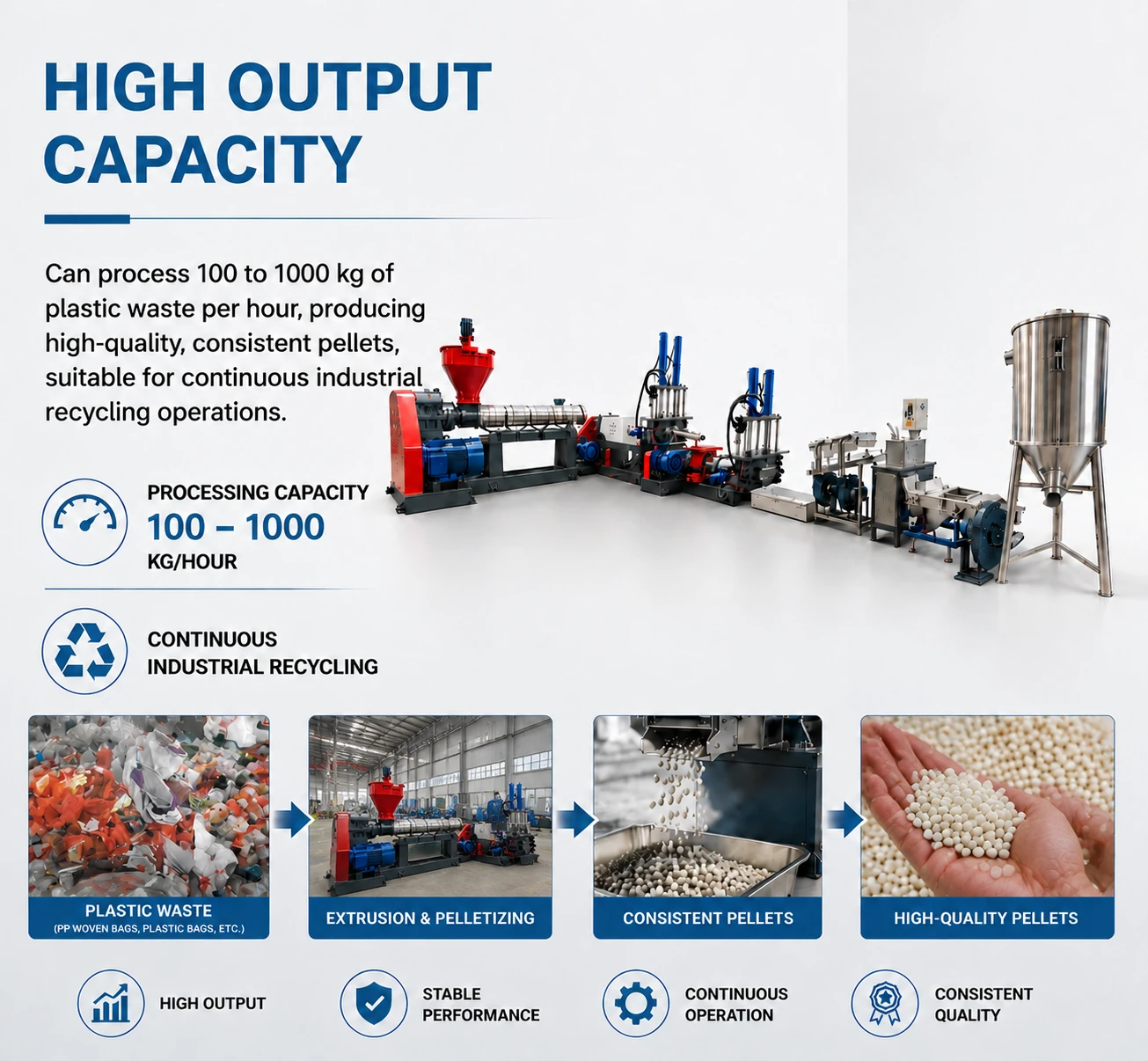
Plastic Recycling Granulator
Turn production waste and post-industrial film back into clean, reusable pellets. Washing, drying, extrusion and pelletizing in one line — closing the loop on your own scrap.
| Throughput | 150 – 1000 kg/h |
|---|---|
| Materials | PE · PP · PA film and regrind |
| System | Wash + extrude + pelletize |
| Pellet output | Reusable resin, ready to re-feed |
| Mode | Batch or inline with blown film line |
| Optional | Waste film compactor · dewatering · silo storage |
Choosing a line
Which blown film line
fits your product?
The right layer structure depends on what the film must do — price, strength, barrier or printability. Three E-SHION configurations cover the practical range from commodity bags to high-barrier packaging.
| Monolayer | ABA 3-layer | 3–5 layer co-extrusion | |
|---|---|---|---|
| Best for | Commodity bags and low-cost liners | Strong film while controlling resin cost | Barrier packaging, food and industrial film |
| Materials | LDPE · LLDPE · HDPE | Skins + filled or recycled core | LDPE · LLDPE · HDPE · PA · EVOH |
| Key advantage | Simple to run, lowest investment per line | Higher strength than single-layer at the same gauge, without lamination | Each layer tuned for barrier, seal or strength — properties are built into the film |
| Typical products | Garment bags, carrier bags, industrial liners | Shopping bags, garbage bags, heavy-duty sacks | High-barrier food film, agricultural film, shrink film |
| E-SHION models | Monolayer blown film machine | ABA film blowing machine | IBC 3-layer film blowing machine |
Two terms buyers often search together are worth separating. Blown film vs blow molding: blown film extrusion produces flat film and bags; blow molding produces hollow containers such as bottles and canisters. E-SHION machinery covers the film and bag side of that range — from resin to finished flexible packaging.
Flexo vs gravure at a glance: flexographic presses suit medium runs, frequent design changes and film, paper or laminate substrates; rotogravure presses suit long, high-color runs on BOPP, PET, nylon and foil with repeatable color. Both integrate with E-SHION blown film and bag making lines.
Materials & end products
Match the resin
to the film you sell
The same machine family runs different polymers by changing screw, die and process settings. Here is how E-SHION lines map common resins to typical end products.
| Resin | Typical end products on E-SHION lines |
|---|---|
| HDPE | Shopping bags, carrier bags, heavy-duty sacks — stiff film with high strength at thin gauge |
| LDPE | Garment bags, soft films, industrial liners — easy processing, good clarity |
| LLDPE | Garbage bags, express and courier packaging, tear-resistant film |
| MDPE | Films that need a balance of stiffness, clarity and puncture resistance |
| PP | CPP film for packaging, lamination and bag applications |
| PA / EVOH | Barrier layers in multi-layer food film, combined with LDPE or EVA skins |
Auxiliary equipment
Auxiliary Equipment
Complete your line with auto loaders and dosing units, corona treaters and slitter rewinders.
Factory-direct pricing
Prices quoted to your configuration
E-SHION sells new machines directly from the factory in Ruian, China — no trading-company markup. Because width, layer count, speed and automation change the build, every line is quoted individually. Send your target output and voltage and we reply with a price list and quotation within one business day.
Request a price list →Buyers ask
Frequently asked
questions
How do I choose a blown film machine?
Choose by film width, layer count and daily output: monolayer lines are economical for simple films, while multi-layer co-extrusion blown film machines add barrier performance for food and industrial packaging. Material (HDPE, LDPE, PP) and features such as IBC internal cooling and automatic air ring control decide output quality and efficiency.
What is the difference between monolayer and multi-layer blown film machines?
A monolayer blown film machine extrudes a single-layer film, ideal for simple packaging and lower budgets. Multi-layer co-extrusion blown film machines combine several layers in one die head, adding strength and barrier properties without lamination, which suits food packaging and high-barrier films.
Which bag making machine do I need for T-shirt bags or garbage bags?
High-speed automatic bag making machines handle T-shirt, vest, grocery and garbage bags straight from the blown film roll: heat-seal or U-seal, photocell registration, automatic stacking, 80-400 cycles per minute. Choose lane count and bag width by your daily volume.
Can flexo or gravure printing presses be integrated into my production line?
Yes. CI and stack-type flexographic presses are ideal for film, paper and laminates, while rotogravure presses deliver long, consistent high-color runs on flexible packaging. Both integrate with blown film and bag making lines.
Are E-SHION machines CE certified?
Yes. Machinery is assessed to the Machinery Directive 2006/42/EC, Low Voltage Directive 2014/35/EU and EMC Directive 2014/30/EU, plus EN ISO 12100 risk assessment; production follows an ISO 9001 quality management system.
What after-sales support do you provide?
Every line includes installation and commissioning, operator training, 24/7 technical support with an average 4-hour response, and original spare parts shipped globally, with annual preventive inspection available.