Home/Machines/Plastic Recycling Granulators
Recycling line
Plastic Granulating Machine
If you’re in the plastic recycling industry, you know that the quality of your pellets determines your profit.
Video
Machine in action
Plastic Granulating Machine in Action
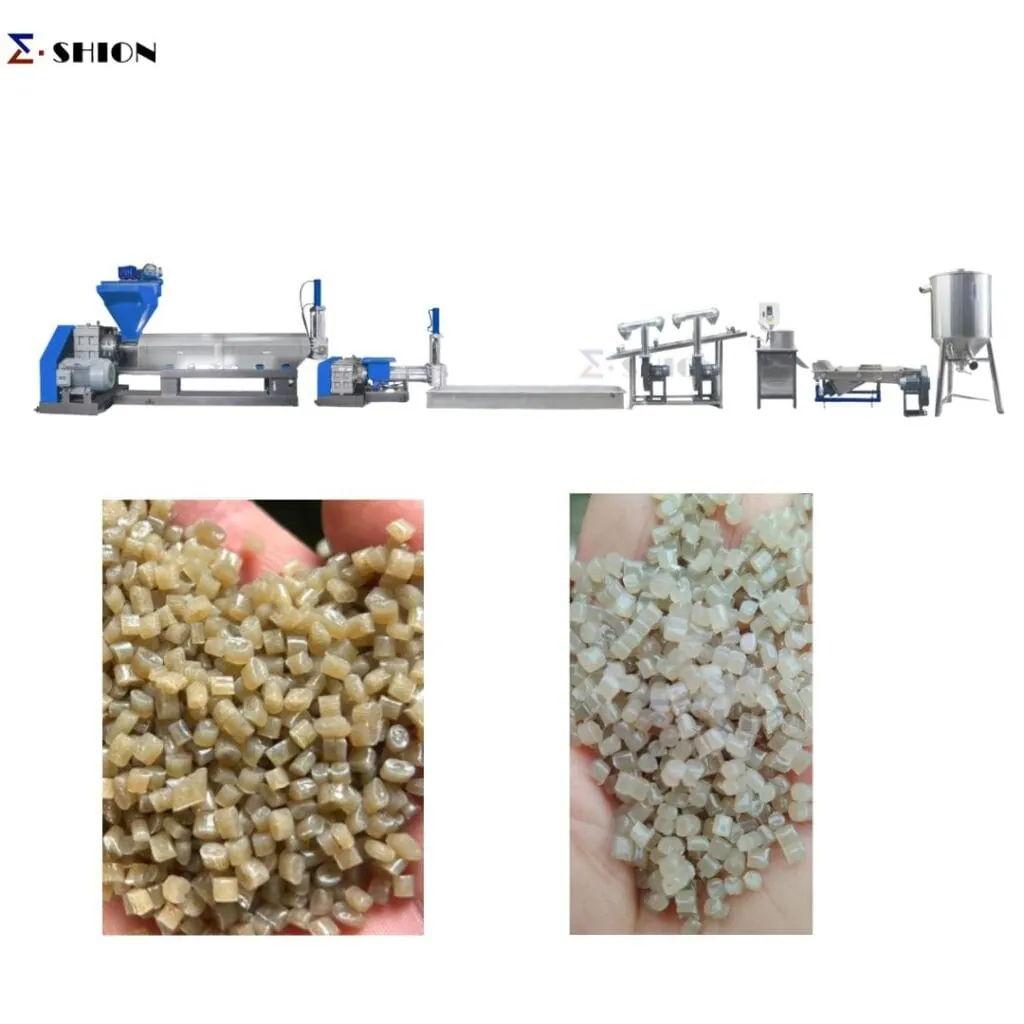
Plastic granulating machine (plastic recycling granulator) for HDPE, LDPE and PP scrap: washing, extrusion and pelletizing in one line. Manufacturer specs…
Plastic Granulating Machine in Action (Video 2)
Product overview
What it is,
what it makes
If you’re in the plastic recycling industry, you know that the quality of your pellets determines your profit. Whether you’re processing HDPE, LDPE, or PP scrap, a plastic granulating machine is the heart of your operation. After years of visiting factories and comparing dozens of models, I’ve narrowed down the seven most important factors you must evaluate before making a purchase. This guide is based on a real specification sheet for a well-engineered unit (the SJ series), but the principles apply to any plastic granulating machine you consider. Not all granulators can handle different types of polyolefins. A good plastic granulating machine must be designed for both rigid and flexible materials. The SJ series, for example, processes HDPE, LDPE, and PP block scrap. This versatility means you can accept a wider range of input material, reducing your sorting costs. Ask your supplier: “Can the machine run both film and rigid scrap?” If the screw design isn’t optimized for mixed materials, you’ll end up with inconsistent melt quality. Manual screen changes are a productivity killer. The best plastic granulating machine includes a quick motor-operated filter screen replacement unit. This allows you to change the screen without stopping the extruder, keeping your line running. The SJ series features this as standard. Without it, you could lose 20–30 minutes every hour. When comparing machines, always check if the screen changer is motorized and can handle continuous operation. External Resource:Learn more about screen changer technology from Nordson – Filtration Solutions (DoFo
Working principle
How the SJ series
granulator works
A plastic granulating machine re-melts scrap and forms it into uniform, reusable pellets. The SJ series covers the whole path — feed, melt, filter, pelletize — in one line.
Accept film, regrind and block scrap
HDPE, LDPE and PP scrap enters the twin screws — 100/100 mm on the SJ100 up to 150/150 mm on the SJ150. The line accepts both flexible film waste and rigid block scrap, so sorting effort stays low.
Plasticize into a uniform melt
The screws run at 10–100 rpm over a 28:1–32:1 L/D barrel. Heat from the barrel heating system plus shear friction melts and homogenizes the material, producing a consistent melt quality for the next stage.
Change screens without stopping
A motorized quick screen changer swaps the filter screen while the extruder keeps running. Instead of a 20–30 minute stop for a manual change, the SJ series clears the screen in minutes — and keeps pellet quality uniform.
Cut clean, reusable pellets
The filtered melt is cooled and cut into uniform pellets, from 150–200 kg/h on the SJ100 up to 450–500 kg/h on the SJ150. Pellets are ready to re-feed into a blown film line, batch or inline.
Technical specifications
Spec sheet
Working parameters for the plastic granulating machine. Final configuration is matched to your material and output target.
| Model | SJ100 100 | SJ120 120 | SJ140 140 | SJ150 150 |
|---|---|---|---|---|
| Screw Diameter | 100/100mm | 120/120mm | 140/140mm | 150/150mm |
| Screw L/D Ratio | 28:1–32:1 | 28:1–32:1 | 28:1–32:1 | 28:1–32:1 |
| Screw Speed | 10–100 rpm | 10–100 rpm | 10–100 rpm | 10–100 rpm |
| Main Motor Power | 30 kW | 55 kW | 75 kW | 90 kW |
| Output | 150–200 kg/hr | 200–250 kg/hr | 300–350 kg/hr | 450–500 kg/hr |
| Machine Weight | 5.5 T | 6.5 T | 7.5 T | 8.5 T |
| Cover Dimension | 6000×10000×1800mm | 6500×10000×1800mm | 7000×10000×1800mm | 7500×10000×1800mm |
Price & quotation
Price on request — factory-direct
Indicative factory-direct range: $8,000 – $30,000
Every Plastic Granulating Machine is built to your configuration, so the final price depends on the options you choose. The main price drivers are:
- Machine width and output — wider and faster configurations cost more.
- Layer, color or sealing-lane count.
- Automation level — servo drives, automatic features and PLC control.
- Certification and market adaptation — CE, EAC, 220V/60Hz or 380V/50Hz.
- Shipping terms — FOB Ningbo/Shanghai, CIF or door-to-door, plus installation and training.
Send us your target output, film/bag size and voltage — our engineers reply with a factory-direct quotation within one business day.
Get a Quote →See whether a granulator pays for itself: recycling granulator economics, the numbers.
Buyers ask
Frequently asked
questions
Are you the factory or a trading company?
We are the manufacturer: Wenzhou E-SHION Machinery Co., Ltd. Factory tours and video walk-throughs are welcome.
How is quality checked?
Each machine is assembled and test-run before shipment; test videos, CE documents and a final inspection report are provided.
What are the payment terms?
Terms are confirmed in the proposal — typically T/T with a deposit and the balance before shipment.
What is the lead time?
Lead time depends on the configuration and is confirmed in the proposal before production starts.
What after-sales support do you provide?
Installation supervision, operator training, 24/7 support with a 4-hour average first response, and OEM spare parts shipped globally.
What can this machine produce?
See the Applications section on this page for the typical products this machine is configured for.
How much does this machine cost?
Factory-direct pricing depends on your configuration — width, output, layer or color count and automation level. Send us your target specs and we confirm an exact price within one business day.
What affects the price of this machine?
The main price drivers are machine size and output, number of layers or colors, servo versus stepper drives, automation features, certifications (CE/EAC), voltage adaptation, and shipping and installation terms.
What scrap materials can it process?
The line processes PE and PP film scrap and regrind — including crushed film, woven bag waste and production offcuts. Material mix is confirmed against the line configuration.
What is the pellet output quality?
Output is clean, reusable pellets that can be re-fed directly into a blown film line. The system includes washing (where configured) and melt filtration for consistent quality.
How long is delivery?
Typical delivery is 15–30 days from order confirmation, depending on the configuration and current production schedule. We confirm the exact lead time in the quotation.
Is the machine CE certified?
Yes. Our machinery is assessed to the Low Voltage Directive 2014/35/EU, Machinery Directive 2006/42/EC and EMC Directive 2014/30/EU. The certificate of conformity is provided with the machine.
Can it be integrated with my existing line?
Yes — the granulator can run as a standalone line or be integrated inline with a blown film line to close the scrap loop automatically.
Do you provide installation and training?
Yes. Our engineers supervise installation and commissioning on site, run the first production trials and train your operators — on-site or remotely.
Related products
More from
our line-up
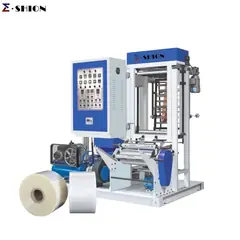
Mini Film Blowing Machine
Welcome to the ultimate solution for flexible, small-scale film production.
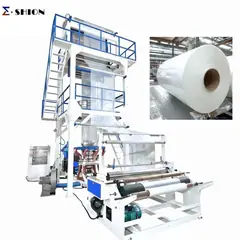
Monolayer Blown Film Machine
In the competitive landscape of plastic packaging, performance and reliability are the keys to profitability.
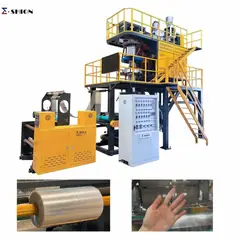
Pp Film Blowing Machine
The PP film blowing machine provides a solution to meet these needs.
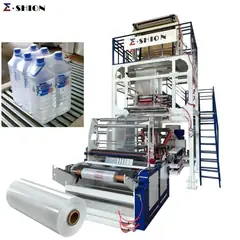
Aba Film Blowing Machine
The ABA film blowing machine has become a cornerstone in the plastic packaging industry.
Applications
What this machine produces
Film scrap, edge trim and off-spec rolls converted into clean PE and PP pellets for closed-loop reuse.
Get your custom solution
Engineered around
your production
Tell our engineering team your output target and facility conditions. We design and build machinery to match — average response time 4 hours.
Send Your Inquiry →