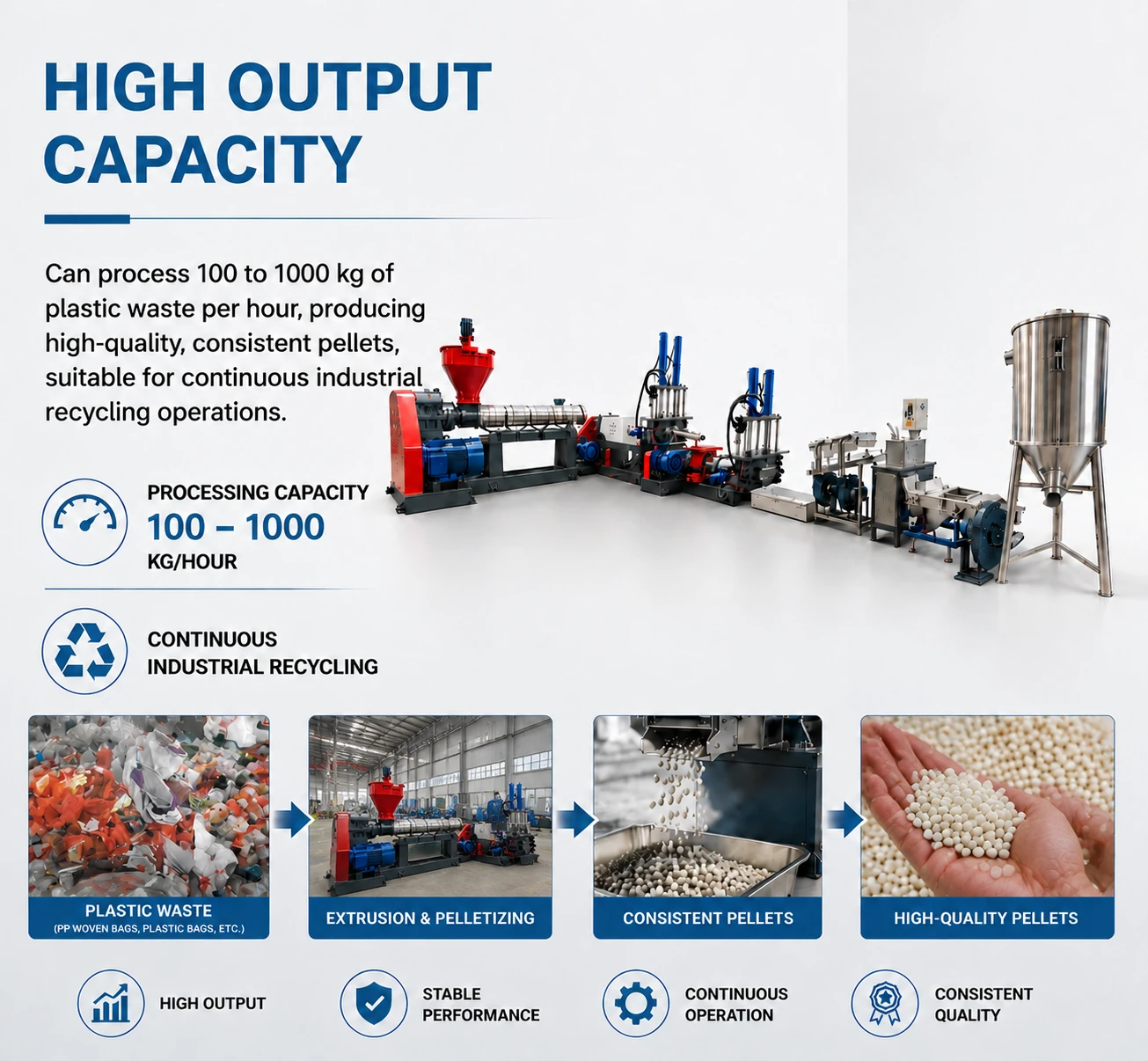
Why sizing matters
Selecting the correct granulator size is a fundamental engineering step in setting up a plastic recycling or extrusion line. An undersized machine creates immediate bottlenecks, causing scrap to accumulate and forcing production stops. Conversely, an oversized granulator consumes unnecessary power and occupies more floor space than required. Proper sizing ensures a balanced workflow where the recycling system seamlessly integrates with the primary production process, maintaining continuous operation and protecting your overall equipment effectiveness. Ultimately, matching the machine to the scrap volume is about achieving a stable, predictable production rhythm.
The SJ range
Our SJ series granulators are designed to handle varying throughput requirements while maintaining consistent pellet quality. The machines feature a screw L/D ratio of 28:1–32:1, providing adequate residence time for melting and homogenization. The screw speed is adjustable between 10–100 rpm, allowing operators to fine-tune the process for different materials and throughput targets. Depending on the specific model chosen, the physical footprint and structural requirements vary, with machine weights ranging from 5.5–8.5 T. The technical specifications for the current SJ lineup are detailed in the table below.
Peak vs average scrap
A frequent miscalculation in line design is sizing the granulator based on the average scrap volume generated over a standard shift. This approach ignores the dynamic nature of plastic manufacturing. You must size the equipment for peak scrap flow. During production changeovers, purging, and machine start-up, the volume of off-spec material and scrap increases significantly. Sizing for these peaks ensures the line keeps up with the sudden surge in material, preventing backlogs that would otherwise halt the primary extruders and disrupt the entire facility. If the granulator cannot process the material fast enough during these high-volume events, the entire extrusion line must stop.
Feeding the granulator
Machine capacity is only one part of the equation; the physical condition of the material entering the hopper dictates actual throughput. Thick purges, large lumps, or contaminated flakes require different handling strategies to ensure steady feeding and prevent bridging or motor overload. Because every production environment generates scrap differently, you must confirm feed preparation, including specific pre-cutting and washing requirements, with our engineers. This technical consultation ensures the upstream equipment is correctly matched to the granulator's intake capabilities and operational limits.
| Model | Output (kg/h) | Motor Power (kW) |
|---|---|---|
| SJ100 | 150–200 | 30 |
| SJ120 | 200–250 | 55 |
| SJ140 | 300–350 | 75 |
| SJ150 | 450–500 | 90 |
Frequently asked questions
What is the output and motor power of the SJ150 granulator?
The SJ150 granulator delivers an output of 450–500 kg/h and is equipped with a 90 kW motor.
Why should the granulator be sized for peak scrap flow rather than average volume?
Sizing for peak scrap flow ensures the line keeps up during changeovers and start-up when scrap generation spikes.
What is the weight range and screw speed for the SJ series machines?
The SJ series machines weigh between 5.5–8.5 T and feature a screw speed range of 10–100 rpm.
How do I determine if my scrap requires pre-cutting or washing before granulation?
You must confirm feed preparation requirements, such as pre-cutting and washing, with our engineers.
Get your custom solution
Talk to our
engineering team
Send your material, sizes and output target — our engineers reply within 4 hours on business days.
Send Your Inquiry →