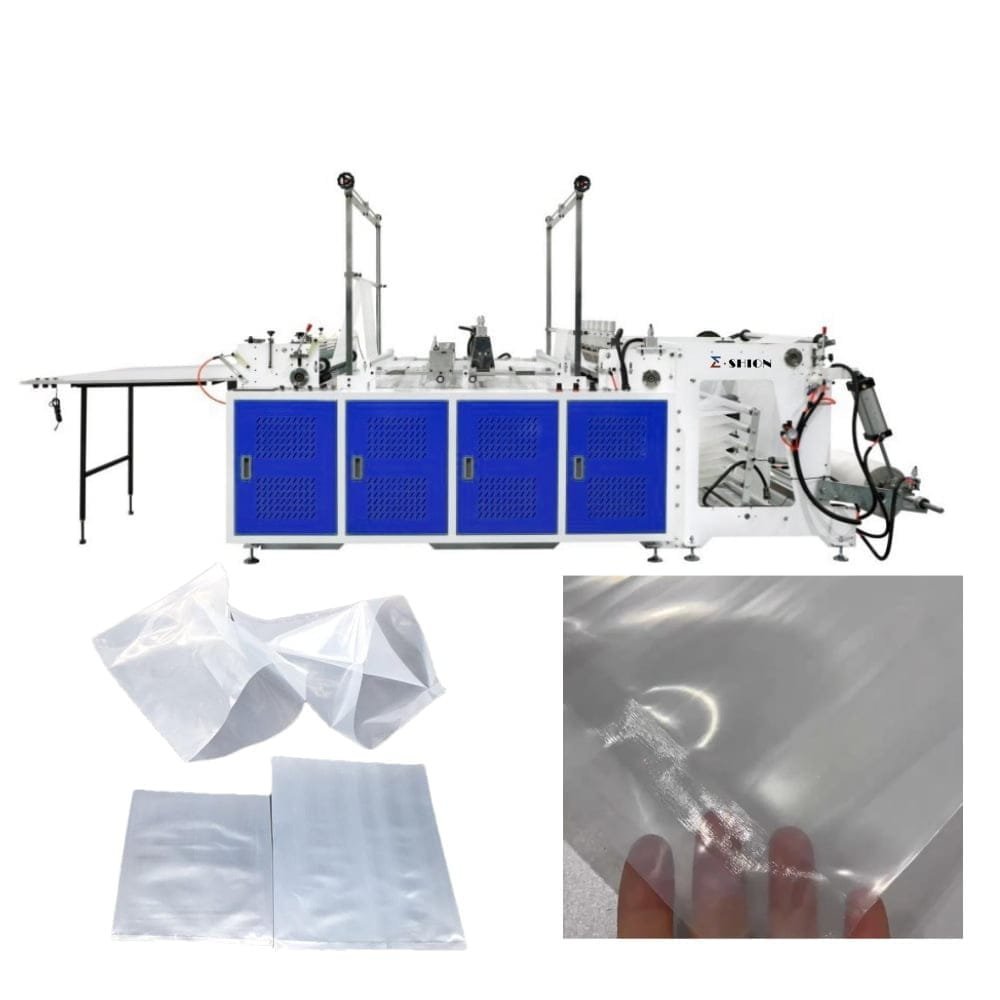
Sealing direction defines the machine
The fundamental difference in plastic bag manufacturing lies in the sealing direction. This single parameter dictates the bag's final structure, the mechanical layout of the machinery, and the specific applications it can serve. Understanding whether a machine produces a bottom-seal or side-seal bag is the first step in selecting the right equipment for your production line. The sealing direction determines how the film is folded, cut, and ultimately formed into the final product. Choosing the correct sealing method ensures optimal material usage and meets the structural demands of the end product.
Bottom seal: handles and stacking
Bottom-seal machines, specifically the GFQ family, are designed to seal across the entire width of the bag. This cross-sealing method is essential for producing bags that require a sealed bottom and an open top. A key feature of the GFQ family is its ability to punch handles, making it the standard choice for manufacturing T-shirt bags. The bottom-seal configuration also influences how the finished bags are stacked and counted at the end of the production line, ensuring neat piles for packaging and distribution.
Side seal and thermal cutting (DRW)
Side-seal machines operate by sealing along the sides of the bag. Production speeds for entry-level side-seal machines typically range from 30 to 120 bags per minute. For higher output requirements, the DRW series operates at speeds between 40 and 180 bags per minute. The DRW thermal-cutting models offer specific dimensional capabilities. The DRW-600 handles widths from 10 to 550 mm, while the DRW-1000 accommodates widths from 10 to 950 mm. Both models produce bag lengths up to 990 mm and process film thicknesses ranging from 0.01 to 0.10 mm.
Which film goes where
Film compatibility depends heavily on the machine type and its cutting mechanism. The DRW side-seal series is engineered to run BOPP, OPP, and PE films. It can process both printed and non-printed materials efficiently, maintaining registration and cut quality. Selecting the correct film for the specific machine prevents tearing and ensures a clean seal. Regarding the specific film types compatible with the bottom-seal GFQ family, confirm with our engineers.
| Model | Width Range (mm) | Max Length (mm) | Film Thickness (mm) |
|---|---|---|---|
| DRW-600 | 10–550 | 990 | 0.01–0.10 |
| DRW-1000 | 10–950 | 990 | 0.01–0.10 |
Frequently asked questions
What is the primary function of the GFQ family of machines?
The GFQ family consists of bottom-seal machines that seal across the bag width and punch handles for T-shirt bags.
What is the production speed difference between entry-level side-seal machines and the DRW series?
Entry-level side-seal machines run at 30 to 120 bags per minute, while the DRW series operates at 40 to 180 bags per minute.
What is the maximum bag length that DRW thermal-cutting models can produce?
DRW thermal-cutting models can produce bag lengths up to 990 mm.
Which types of film can the DRW series process?
The DRW series can run BOPP, OPP, and PE films, whether they are printed or non-printed.
Get your custom solution
Talk to our
engineering team
Send your material, sizes and output target — our engineers reply within 4 hours on business days.
Send Your Inquiry →