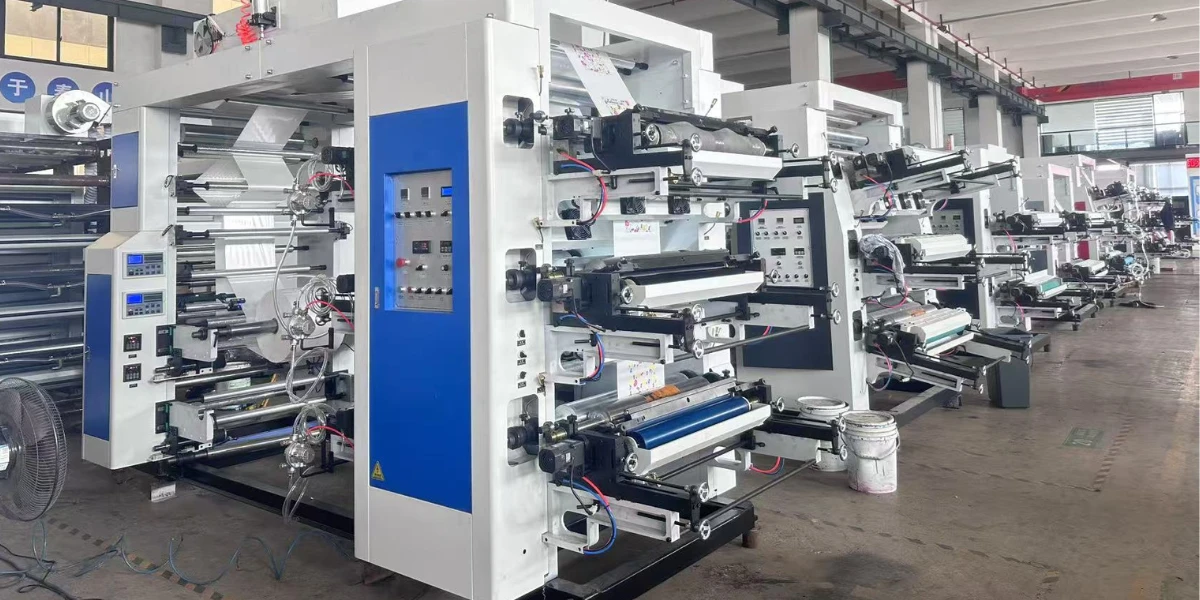
Why Registration Matters
In plastic packaging production, print-to-cut precision determines the final quality of the product. When the cut does not align with the printed design, the resulting bags or pouches are visually defective and often rejected. Maintaining strict registration accuracy ensures that every cut falls exactly where it should relative to the print mark. This precision minimizes material waste, reduces downtime for adjustments, and ensures a professional finish on the final packaged goods. For more details on waste reduction metrics, confirm with our engineers.
Real Accuracy Figures
Different converting machines offer varying levels of overprint and vertical accuracy to meet specific production requirements. The YTL 41000 achieves an overprint accuracy of ±0.25 mm, making it suitable for standard packaging applications. The YTB-A 61000 improves this tolerance to an overprint accuracy of ±0.2 mm. For applications requiring even tighter tolerances, the ESAY-C 1350 delivers a vertical accuracy of ±0.1 mm. This high precision on the ESAY-C 1350 is fully supported by its integrated automatic registration and video inspection systems, which continuously monitor the web. For accuracy data on other models, confirm with our engineers.
What Moves the Print Mark
Even the most precise machinery can struggle to maintain tolerances if the input material is unstable. Film gauge and tension variation are the primary physical factors that shift the print mark during the converting process. When the film thickness fluctuates or the web tension changes, the physical distance between consecutive print marks alters, causing immediate misalignment. Therefore, using consistent film with a uniform gauge and maintaining stable tension throughout the unwind and rewind processes is essential to keep registration stable and predictable. For specific tension control recommendations, confirm with our engineers.
Press and Bag Machine Coordination
The coordination between the printing press and the downstream bag making machine is where the final cut is executed. Bag machines use photocell registration to detect the print mark and align the cuts accordingly. The photocell reads the mark on the moving web, and the machine control system triggers the cutting mechanism at the exact right moment. If the print mark is shifted due to upstream film variations, the photocell will read the altered position, directly impacting the final cut-to-print precision. For specific details on photocell sensitivity settings, confirm with our engineers.
| Machine Model | Accuracy Specification |
|---|---|
| YTL 41000 | Overprint ±0.25 mm |
| YTB-A 61000 | Overprint ±0.2 mm |
| ESAY-C 1350 | Vertical ±0.1 mm (with automatic registration and video inspection) |
Frequently asked questions
What is the overprint accuracy of the YTB-A 61000?
The YTB-A 61000 achieves an overprint accuracy of ±0.2 mm.
What features allow the ESAY-C 1350 to reach ±0.1 mm vertical accuracy?
The ESAY-C 1350 reaches this precision through the use of automatic registration and video inspection.
What material factors cause the print mark to shift?
Film gauge and tension variation are the primary factors that shift the print mark.
How do bag machines ensure the cut aligns with the print?
Bag machines use photocell registration to read the print mark and align the cuts to it.
Get your custom solution
Talk to our
engineering team
Send your material, sizes and output target — our engineers reply within 4 hours on business days.
Send Your Inquiry →