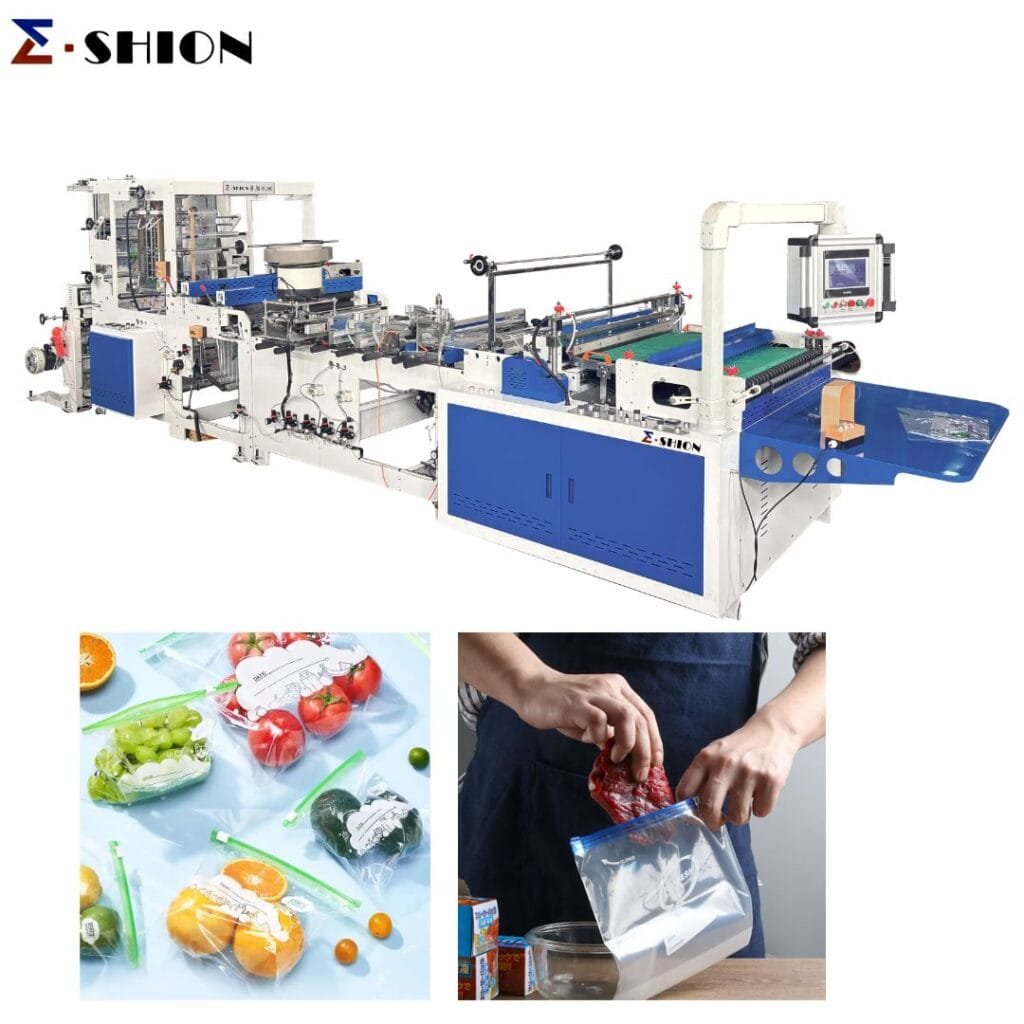
Product overview
What it is,
what it makes
If you are in the packaging industry—whether for food, cosmetics, or hardware—you know that zipper bags are everywhere. But making them consistently, without leakers or misaligned zippers, requires the right equipment. That’s where an automatic zipper bag making machine comes into play. I have spent years on factory floors, and I can tell you: not all machines are created equal. Some save you money upfront but cost you ten times more in downtime and rejects. Let me walk you through the seven critical features that separate a profitable investment from a headache. Before we dive in, one quick note: this is not about price. It’s about value. If you’re serious about buying an automatic zipper bag making machine, these are the points you should discuss with every supplier. The first thing I look at is the drive system. A cheap machine uses clutches and brakes that wear out quickly. A modern automatic zipper bag making machine uses individual servo motors for film feeding, zipper placement, and sealing. For example, Yaskawa servos (a Japanese brand) are industry standards. Why does this matter? Because when your film speed and zipper feed are perfectly synchronized, your bag lengths stay consistent within ±0.5mm. That means fewer scrap bags and happier customers. External Resource:Learn more about servo motor advantages in packaging from Yaskawa’s packaging applications page (DoFollow link). Many operators overlook this feature, but it is a game-changer. A zipper area is thick after assembly. If you heat-seal it directly, you often get weak spots or uneven pressure. An automatic
Technical specifications
Spec sheet
Working parameters for the automatic zipper bag making machine. Final configuration is matched to your material and output target.
| Specification | ESBC-800 (Compact Model) | ESBC-1000 (Large Format Model) |
|---|---|---|
| Max Bag Height | 700 mm | 900 mm |
| Machine Footprint | 7.2m x 1.4m x 1.8m | 8.5m x 1.65m x 2.0m |
| Servo Motor Power | 2.0 kW | 2.2 kW |
| Application Fit | Medium-sized food/stationery bags | Large bulk bags, mattress packaging, quilts |
How it works
How it works,
step by step
Material Feed and Layout Configuration
The raw polymer film is mounted on the unwind shaft and routed through mechanical tension brakes. The complete drive assembly requires a floor space of 7.2m x 1.4m x 1.8m for the compact model or 8.5m x 1.65m x 2.0m for the large format unit.
Precision Tape Alignment
Optical trackers detect the zipper edge and feed it into position using closed-loop servo motors. The system draws 2.0 kW on the ESBC-800 platform and 2.2 kW on the ESBC-1000, delivering stable torque for accurate lateral positioning.
Tubular Folding and Vertical Sealing
The laminated web passes through a forming collar and is heat-sealed along the continuous side seam. This stage supports maximum bag heights of 700 mm for standard pouches and 900 mm when processing oversized formats.
Cross Sealing and Product Sorting
Reciprocating sealing jaws close the bag bottom while a shear blade trims the excess film. The output handles medium-sized food and stationery pouches on the base model, scaling to heavy-duty mattress and quilt packaging on the larger variant.
Price & quotation
Price on request — factory-direct
Every Automatic Zipper Bag Making Machine is built to your configuration, so the final price depends on the options you choose. The main price drivers are:
- Machine width and output — wider and faster configurations cost more.
- Layer, color or sealing-lane count.
- Automation level — servo drives, automatic features and PLC control.
- Certification and market adaptation — CE, EAC, 220V/60Hz or 380V/50Hz.
- Shipping terms — FOB Ningbo/Shanghai, CIF or door-to-door, plus installation and training.
Send us your target output, film/bag size and voltage — our engineers reply with a factory-direct quotation within one business day.
Get a Quote →Read the 2026 plastic bag making machine price guide for indicative factory-direct ranges.
Buyers ask
Frequently asked
questions
How much does this machine cost?
Factory-direct pricing depends on your configuration — width, output, layer or color count and automation level. Send us your target specs and we confirm an exact price within one business day.
What affects the price of this machine?
The main price drivers are machine size and output, number of layers or colors, servo versus stepper drives, automation features, certifications (CE/EAC), voltage adaptation, and shipping and installation terms.
What bag sizes can this machine produce?
Bag size ranges are listed in the spec sheet — typically up to the width and length shown for the model. The machine is adjusted for your bag dimensions during commissioning.
What is the production speed?
Speed is shown in the spec sheet (cycles per minute). Actual output depends on bag size and film material; daily output estimates are included in the quotation.
How long is delivery?
Typical delivery is 15–30 days from order confirmation, depending on the configuration and current production schedule. We confirm the exact lead time in the quotation.
Is the machine CE certified?
Yes. Our machinery is assessed to the Low Voltage Directive 2014/35/EU, Machinery Directive 2006/42/EC and EMC Directive 2014/30/EU. The certificate of conformity is provided with the machine.
Can it run different bag types?
Each model is built for a specific bag family (T-shirt, zipper, garment, garbage, side-seal, etc.). If you produce multiple bag types, tell us your mix and we will recommend the right machine or line.
Do you provide installation and training?
Yes. Our engineers supervise installation and commissioning on site, run the first production trials and train your operators — on-site or remotely.
Related products
More from
our line-up
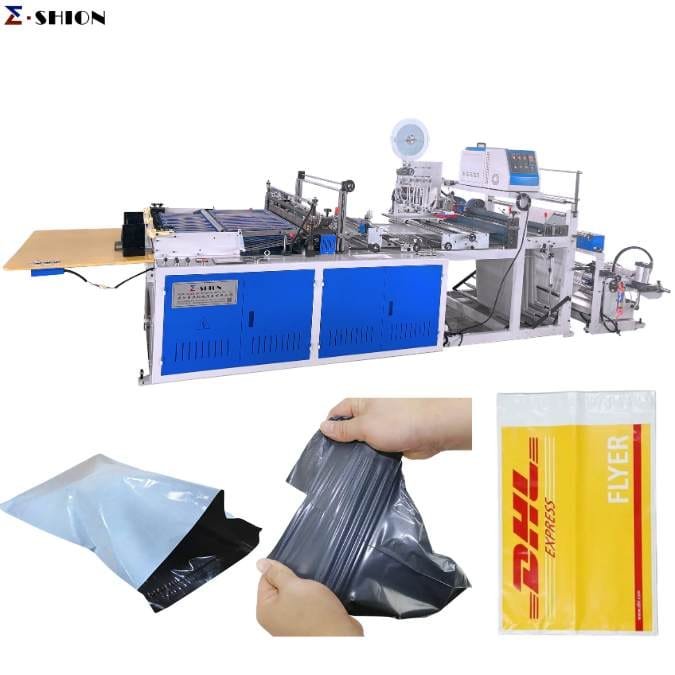
Express Bag Making Machine Dhl
The express bag making machine (also commonly referred to as a courier bag making machine) is the backbone of the modern e-commerce logistics chain.
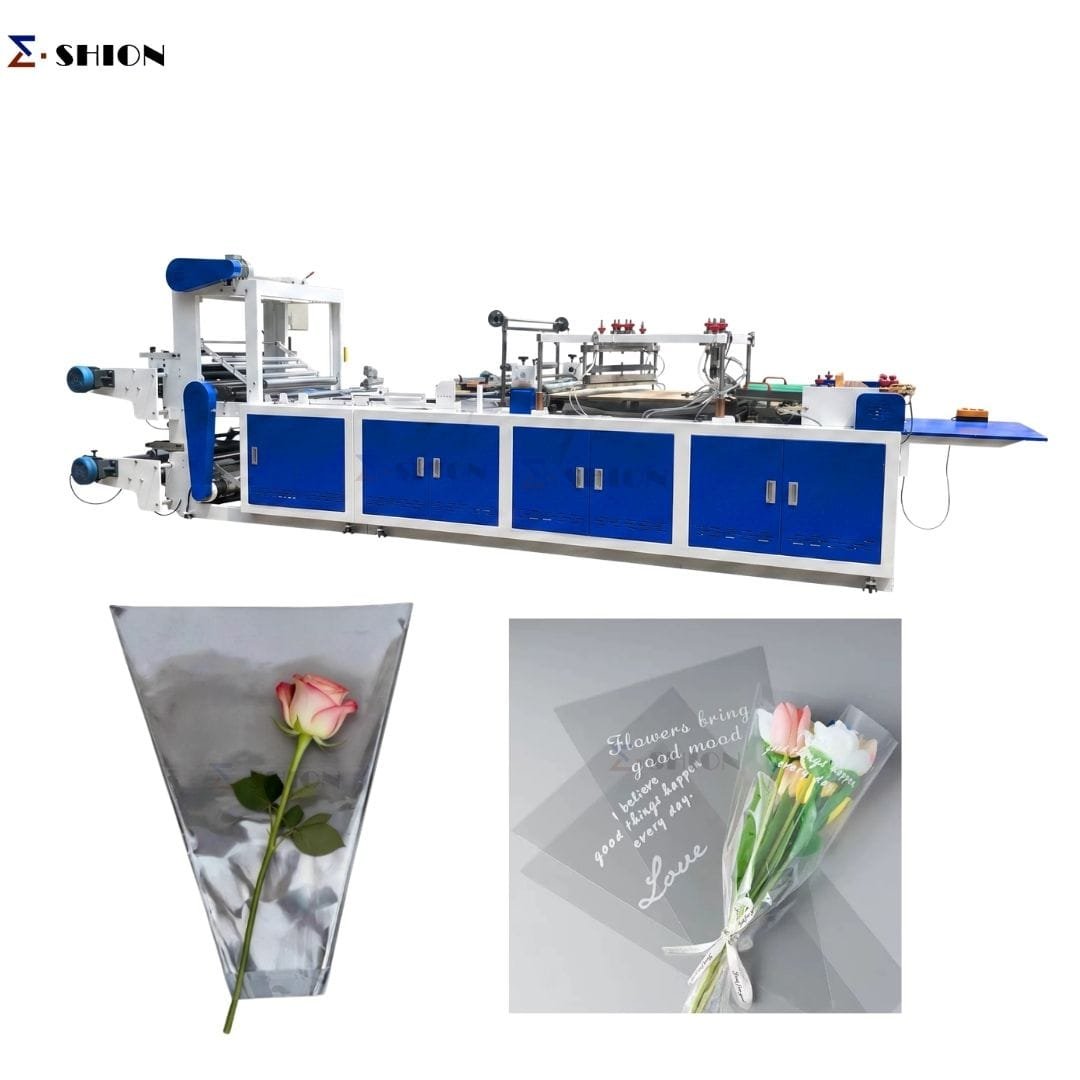
Flower Bag Making Machine
The ES-YX800 is a high-speed automatic flower bag making machine designed specifically for producing flower bouquet sleeves and bags.
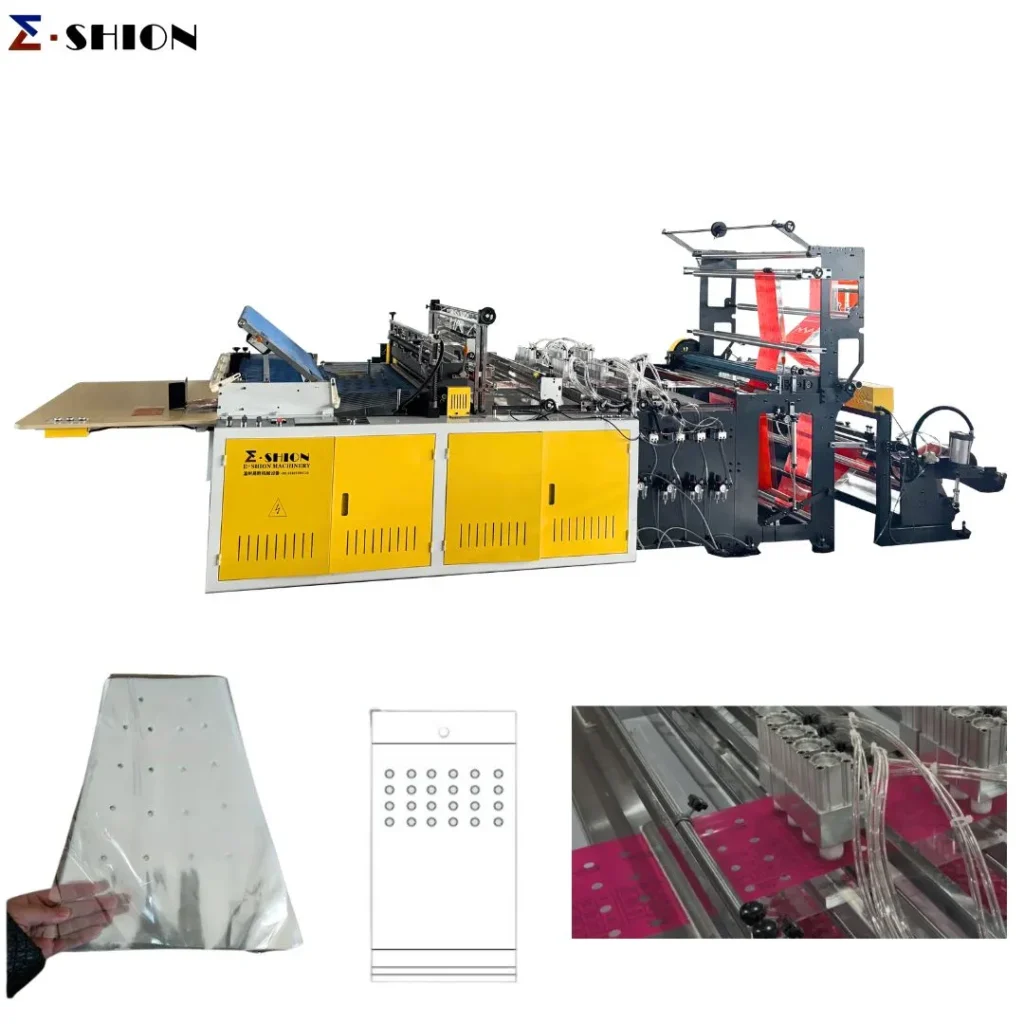
Hs Side Sealing Bag Making Machine
A side sealing bag making machine is the industry standard for producing high‑strength side seal bags used in retail, food, e‑commerce, and garment packaging.
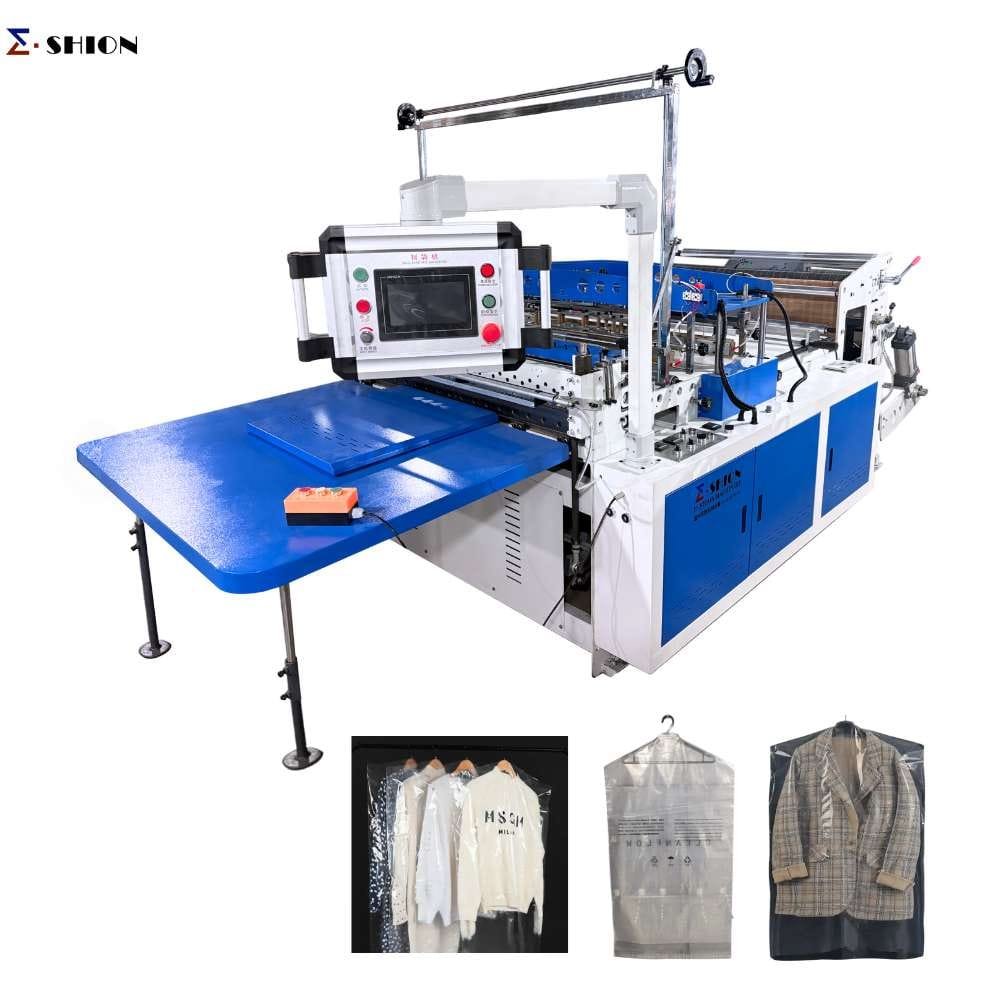
Garment Bag Making Machine
In today’s hyper-competitive retail environment, product presentation is no longer optional—it is a decisive factor in consumer purchasing decisions.
Get your custom solution
Engineered around
your production
Tell our engineering team your output target and facility conditions. We design and build machinery to match — average response time 4 hours.
Send Your Inquiry →