Product overview
What it is,
what it makes
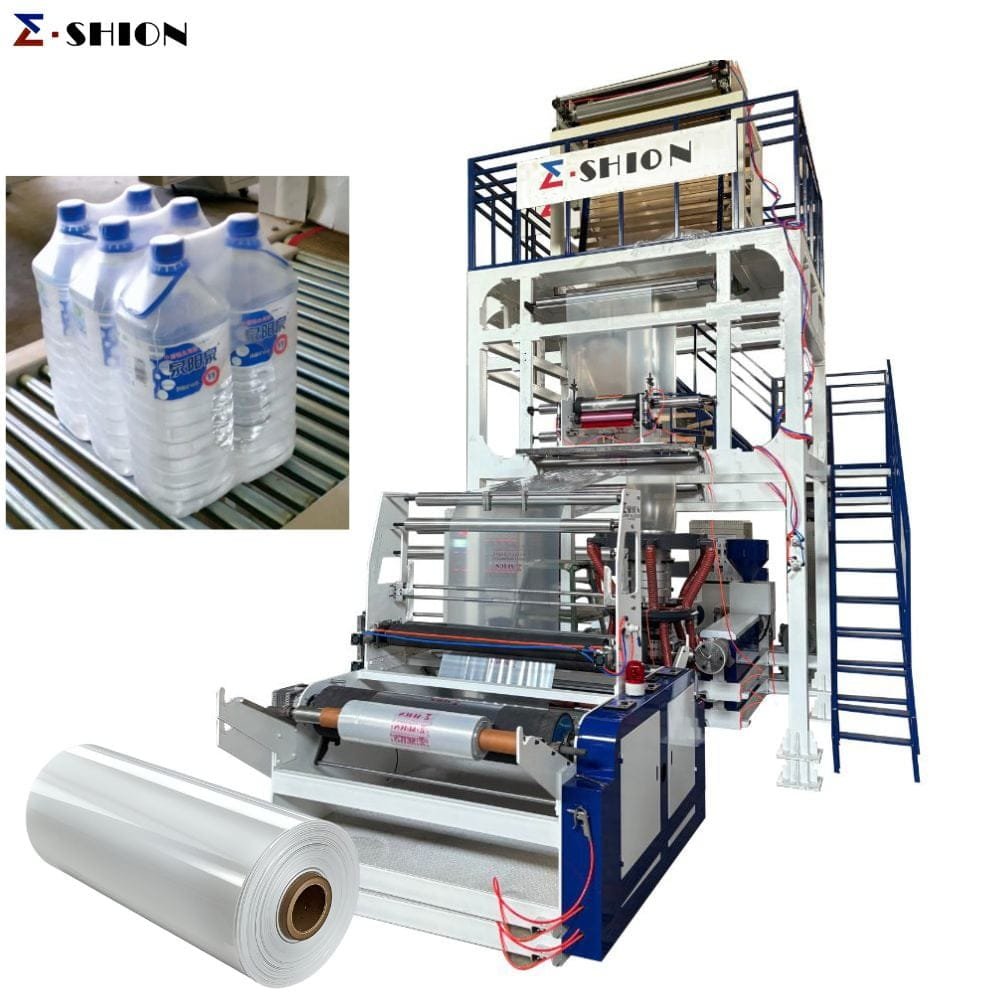
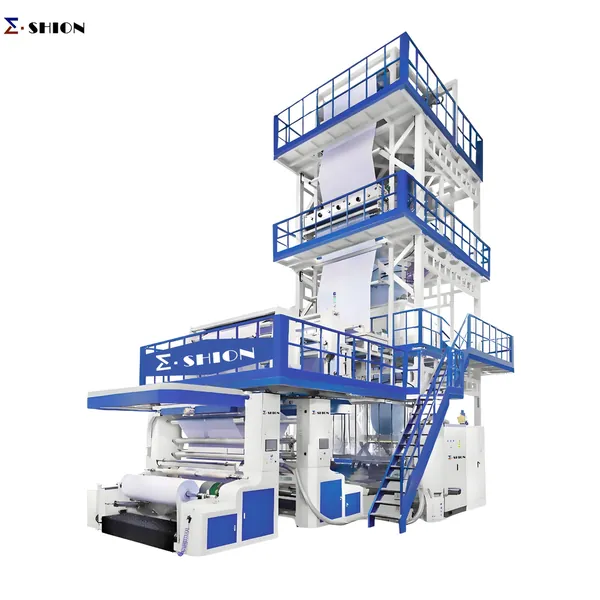
The ABA film blowing machine has become a cornerstone in the plastic packaging industry. By utilizing a three-layer co-extrusion process with only two extruders, it offers a perfect balance between high-quality output and significantly reduced production costs. An ABA film blowing machine is equipped with two extrusion units and a specialized three-layer co-extrusion die head. In this configuration, the two outer surface layers share one extruder (Layer A), while the middle core layer is fed by a second, dedicated extruder (Layer B). This creates a sandwich-like structure (A/B/A). While the machine is designed for ABA structures, its versatility allows it to produce AAA films (monolayer equivalent) as well. This flexibility makes it the preferred choice for manufacturers looking to upgrade from traditional single-layer machines. The A/B/A structure provides superior physical properties compared to single-layer films, making it suitable for a wide range of industries: The ABA film blowing machine is exceptionally efficient at processing HDPE, LDPE, and LLDPE blends. A common configuration involves using premium HDPE for the A-layers (surface) to ensure a bright, glossy, and smooth finish. Meanwhile, the B-layer (middle) can incorporate a high percentage of HDNJ (recycled material) or calcium carbonate (CaCO3CaCO sub 3) fillers. This setup ensures the film remains aesthetically pleasing and strong while slashing raw material expenses. For manufacturers, the primary draw of the ABA film blowing machine is the ability to use up to 30% recycled materials or fillers in the middle
Technical specifications
Spec sheet
Working parameters for the aba film blowing machine. Final configuration is matched to your material and output target.
| Feature | SJ-FM1100 | SJ-FM1600 | SJ-FM1800 |
|---|---|---|---|
| Material Type | LDPE/LLDPE/HDNJ/CaCO₃ | LDPE/LLDPE/HDNJ/CaCO₃ | LDPE/LLDPE/HDNJ/CaCO₃ |
| Film Width | 100-600 mm | 300-1000 mm | 400-1200 mm |
| Max Output | 40-60 kg/h | 60-100 kg/h | 60-120 kg/h |
| Screw Diameter | φ45 / 50 | φ50 / 55 | φ60 / 65 |
| Motor Power | 11kw / 15kw | 18.5kw / 22kw | 22kw / 30kw |
| Dimensions (LWH) | 5.5×2.2×4.5 m | 6.2×2.8×5.4 m | 7.0×3.0×6.0 m |
How it works
How it works,
step by step
Resin Extrusion
Raw polymers including LDPE, LLDPE, HDNJ, and CaCO₃ are fed into dual extrusion units powered by motors rated between 11 kW and 30 kW. The material advances through screws with diameters of φ45 mm to φ65 mm, where thermal barrels and mechanical shear convert the solid feedstock into a consistent molten state.
Co-Extrusion Die Head
Melted resin from the primary extruder is split to form the two outer surface layers while the secondary extruder feeds the central core layer. These three independent streams merge inside a precision multi-layer die head to establish a stable A/B/A sandwich profile before exiting the annular slit.
Air Inflation & Guiding
High-pressure air injects into the center of the molten tube to expand it into a vertical film bubble that immediately contacts the cooling air ring. Mechanical guides and tension controls maintain bubble stability while the system produces flat film widths ranging from 100 mm to 1200 mm based on the selected model.
Take-Off & Reeling
The inflated bubble passes through a collapsible frame and nip rollers to flatten the film before it reaches the automatic winders. Production continues at steady output rates of 40 to 120 kg/h, with the entire assembly designed to fit within facility footprints measuring up to 7.0 m in length.
Price & quotation
Price on request — factory-direct
Every ABA Film Blowing Machine is built to your configuration, so the final price depends on the options you choose. The main price drivers are:
- Machine width and output — wider and faster configurations cost more.
- Layer, color or sealing-lane count.
- Automation level — servo drives, automatic features and PLC control.
- Certification and market adaptation — CE, EAC, 220V/60Hz or 380V/50Hz.
- Shipping terms — FOB Ningbo/Shanghai, CIF or door-to-door, plus installation and training.
Send us your target output, film/bag size and voltage — our engineers reply with a factory-direct quotation within one business day.
Get a Quote →Read the 2026 blown film machine price guide for indicative factory-direct ranges.
Buyers ask
Frequently asked
questions
How much does this machine cost?
Factory-direct pricing depends on your configuration — width, output, layer or color count and automation level. Send us your target specs and we confirm an exact price within one business day.
What affects the price of this machine?
The main price drivers are machine size and output, number of layers or colors, servo versus stepper drives, automation features, certifications (CE/EAC), voltage adaptation, and shipping and installation terms.
What film width and thickness can this machine produce?
The line handles the width and thickness range shown in the spec sheet — typically 500–2500 mm film width and 0.01–0.12 mm thickness, depending on the model. The exact range for your configuration is confirmed in the proposal.
What materials does it process?
Standard blown film lines process LDPE, LLDPE, HDPE, MDPE and EVA; multi-layer models also run PA and EVOH barrier layers for high-barrier packaging film.
How long is delivery?
Typical delivery is 15–30 days from order confirmation, depending on the configuration and current production schedule. We confirm the exact lead time in the quotation.
Is the machine CE certified?
Yes. Our machinery is assessed to the Low Voltage Directive 2014/35/EU, Machinery Directive 2006/42/EC and EMC Directive 2014/30/EU. The certificate of conformity is provided with the machine.
Can the line be customized?
Yes — film width, output, layer structure, die diameter and automation level are all configurable. Tell us your material and daily output target and we will size the line around it.
Do you provide installation and training?
Yes. Our engineers supervise installation and commissioning on site, run the first production trials and train your operators — on-site or remotely.
Related products
More from
our line-up
Mini Film Blowing Machine
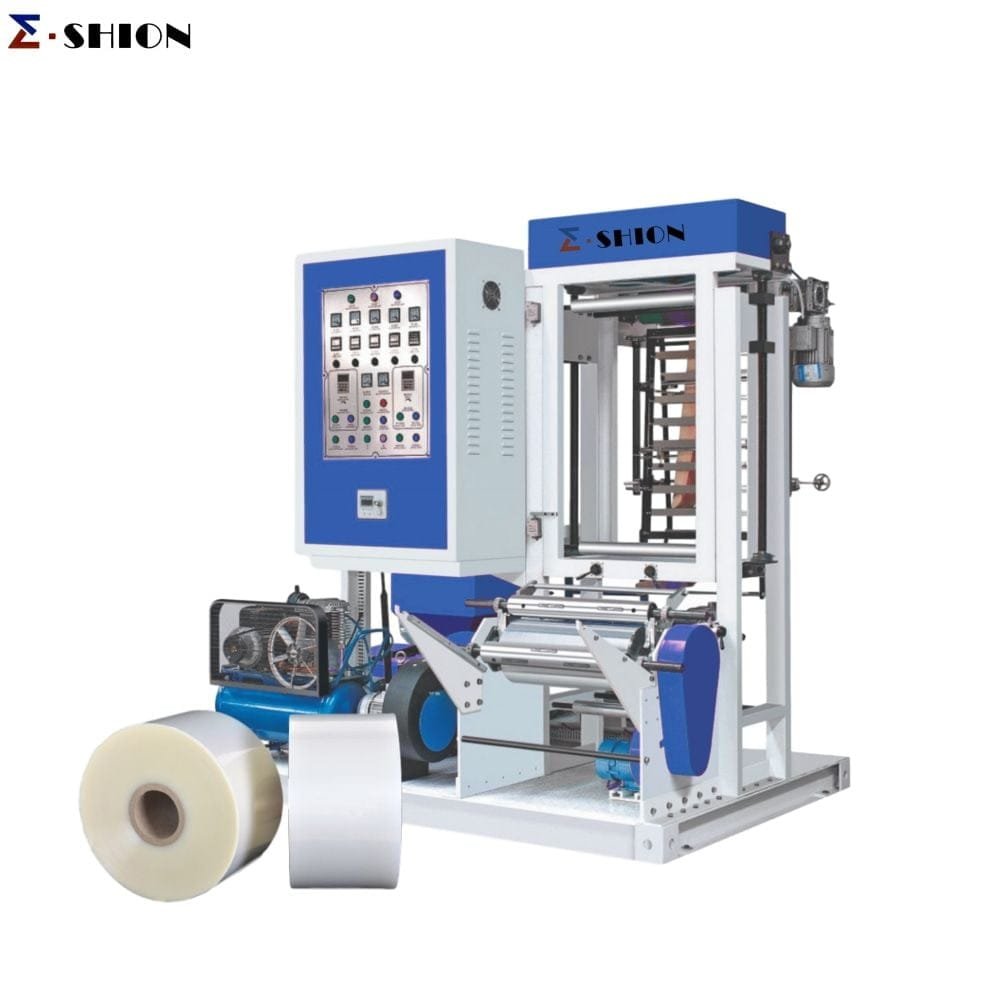
Welcome to the ultimate solution for flexible, small-scale film production.
Monolayer Blown Film Machine
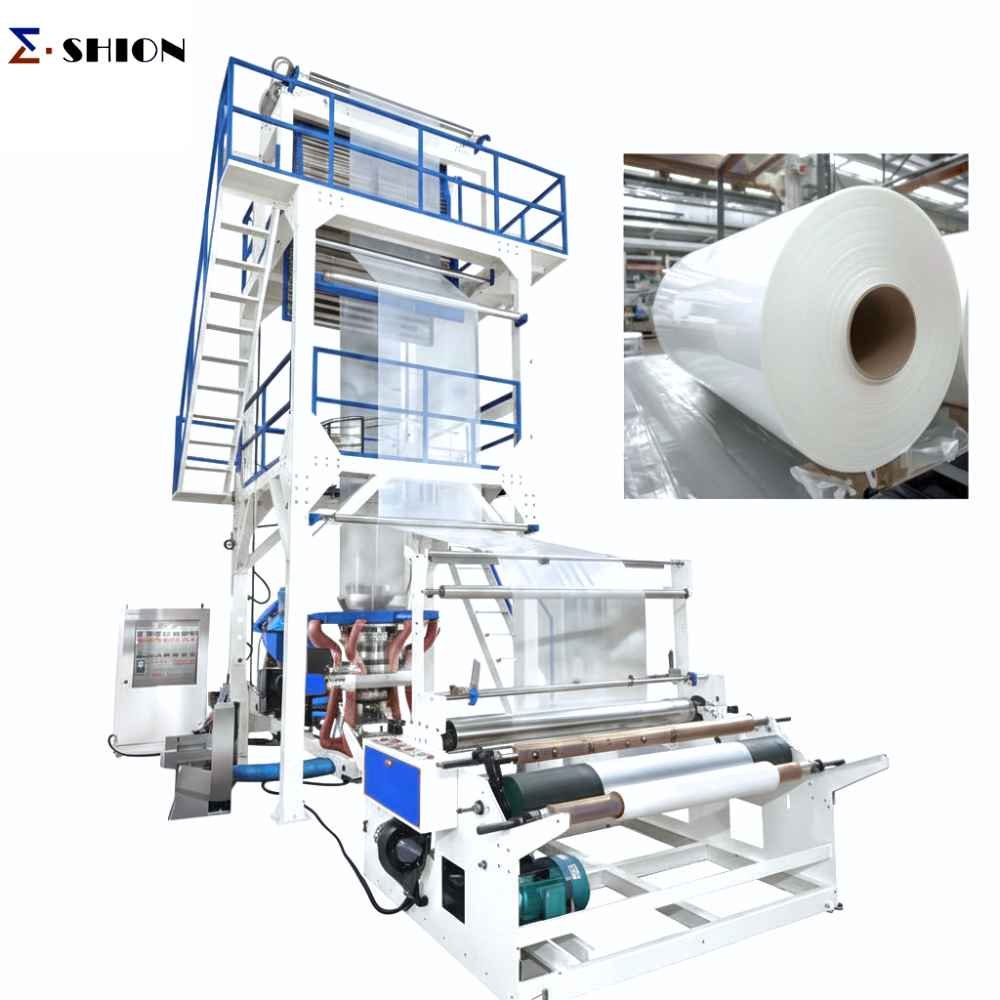
In the competitive landscape of plastic packaging, performance and reliability are the keys to profitability.
Pp Film Blowing Machine
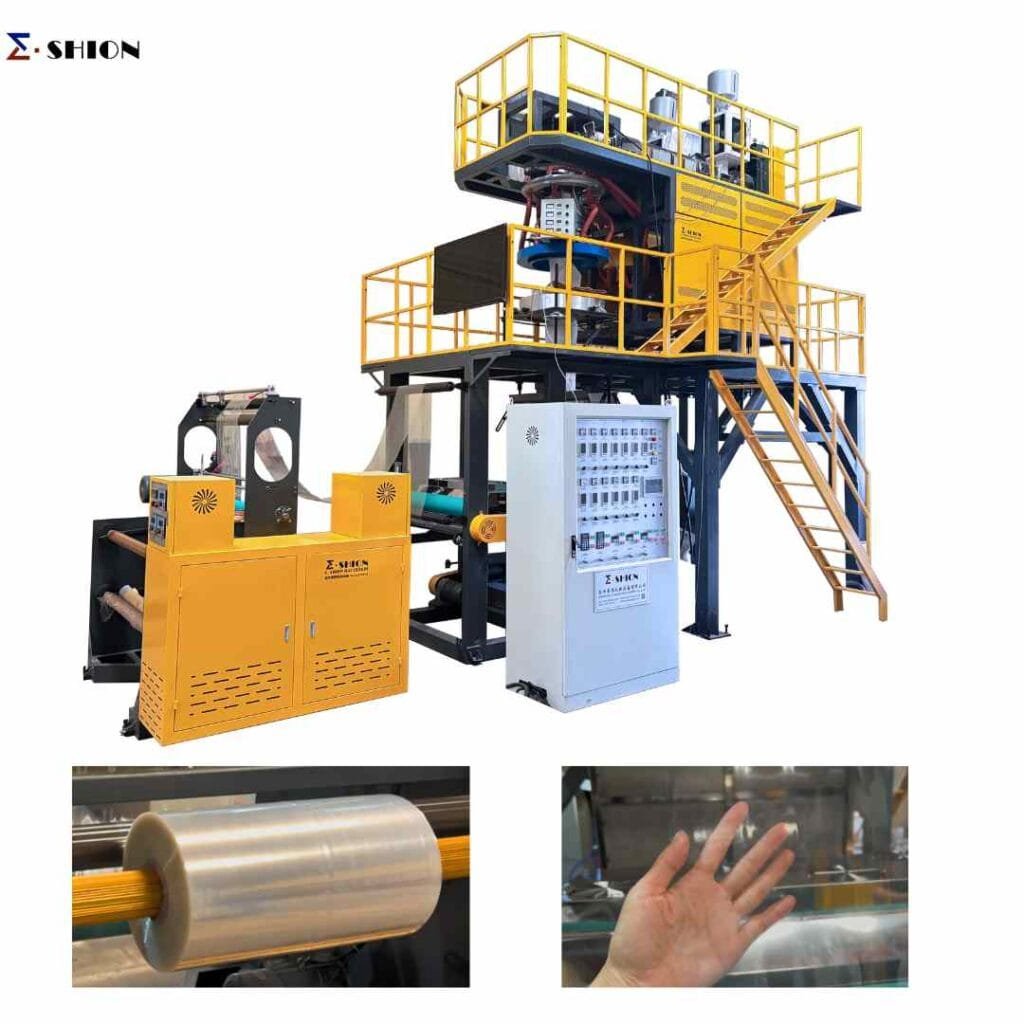
The PP film blowing machine provides a solution to meet these needs.
Ibc 3 Layer Film Blowing Machine
Our 3 Layer Film Blowing Machine is a high-performance, high-precision 3 Layer Film Blowing Machine specialized in manufacturing multi-layer films with superior thickness uniformity, excellent transparency, and outstanding mechanical properties.
Get your custom solution
Engineered around
your production
Tell our engineering team your output target and facility conditions. We design and build machinery to match — average response time 4 hours.
Send Your Inquiry →